Your lawn may look like a simple patch of grass, but it could also be hiding a small grocery store in plain sight. Many of the plants people call “weeds” were once valued as food, medicine, and seasonal greens. Dandelion, purslane, lamb’s quarters, chickweed, plantain, and wild violet can grow right under your feet, only to be mowed down every weekend before anyone thinks to harvest them.
That does not mean every wild plant is safe to eat, and it does not mean you should gather random leaves from the yard and put them in a salad. Backyard foraging requires careful identification, clean growing conditions, and a sensible approach. But when you learn what is growing in your lawn, you may discover edible plants that can add flavor, texture, color, and nutrition to everyday meals.
Why a Well-Fed Lawn Might Be Wasting Groceries
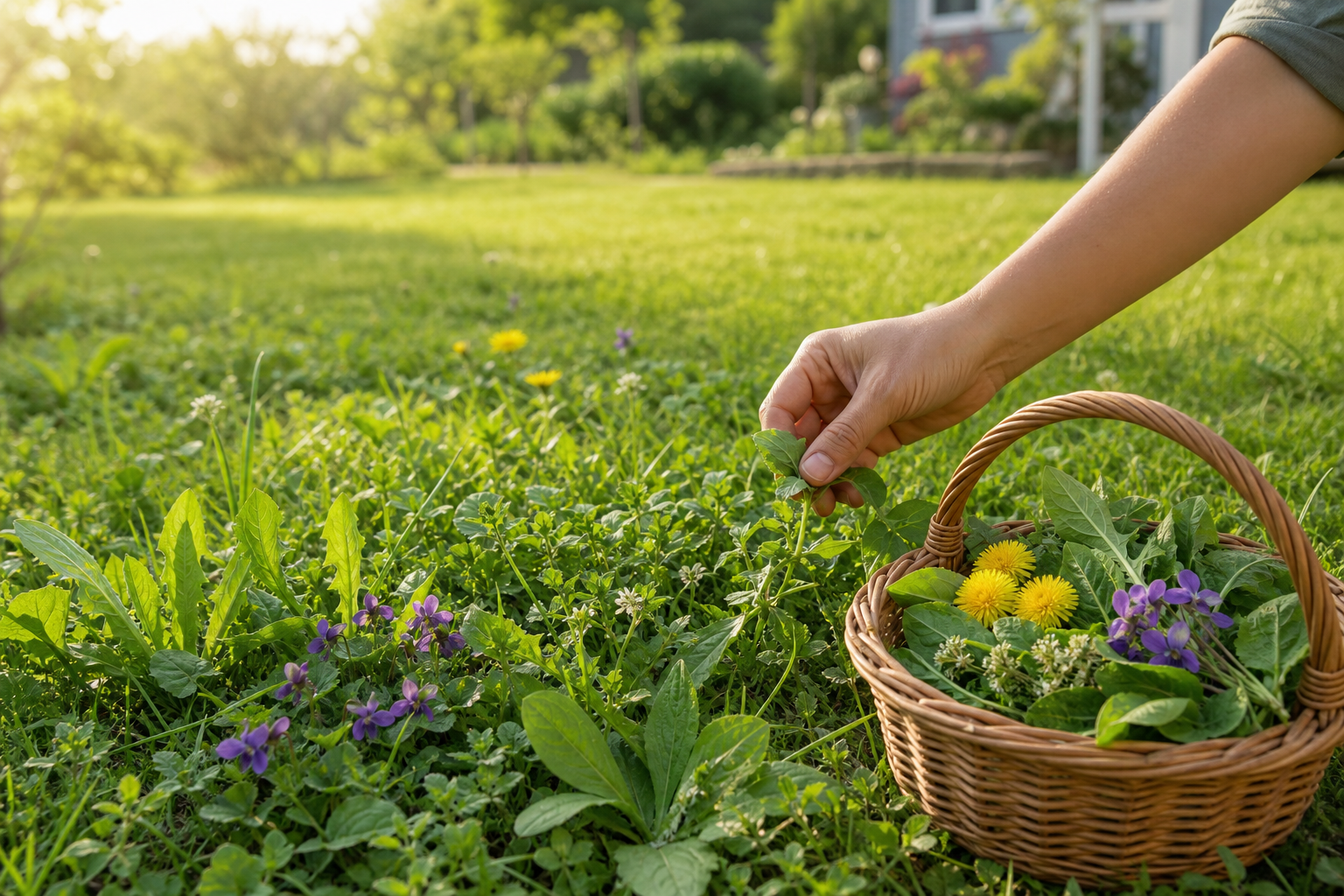
Modern lawns are often treated as decoration. We water them, fertilize them, trim them, and fight anything that grows outside the expected grass pattern. In many yards, a plant is judged only by whether it belongs in a picture-perfect lawn. If it spreads, flowers, or breaks up the uniform green surface, it is called a weed.
But many so-called weeds are successful because they are hardy, adaptable, and useful. They grow in compacted soil, disturbed garden beds, warm cracks in pathways, and shady corners where cultivated vegetables might struggle. Some of them are edible greens that people have used for generations. Dandelion leaves can be cooked like bitter greens. Purslane is juicy and tangy. Chickweed is mild and tender. Lamb’s quarters can be cooked like spinach. Plantain leaves can be used young or cooked. Violet flowers can brighten salads and desserts.
If you mow these plants every week without noticing them, you may be cutting down free food. The goal is not to let your yard become wild and unmanaged. The better goal is to learn which edible plants are present, harvest small amounts from safe areas, and manage your lawn with more intention. A lawn can still be tidy while also being useful.
Before You Forage: Safety Comes First
The most important rule is simple: never eat a plant unless you are completely sure of its identity. Use more than one trusted source, compare the plant at different growth stages, and learn the key features of both the edible plant and its dangerous look-alikes. Plant identification apps can be helpful for clues, but they should not be your final authority. When in doubt, ask a local extension office, botanist, experienced forager, or knowledgeable gardener.
Only harvest from areas you know are clean. Avoid lawns treated with herbicides, pesticides, synthetic chemicals, or unknown fertilizers. Do not gather plants from roadsides, parking lots, public parks, golf courses, vacant lots, or areas where pets regularly use the bathroom. Even edible plants can become unsafe when they grow in contaminated soil or absorb residue from chemical treatments.
When trying a new edible wild plant, start with a small amount. Some people are sensitive to certain greens, especially if they have allergies, kidney concerns, digestive issues, or take medication. Wild foods are real foods, and real foods can affect people differently. Wash all harvested plants thoroughly under cool running water, remove damaged leaves, and use them soon after picking.
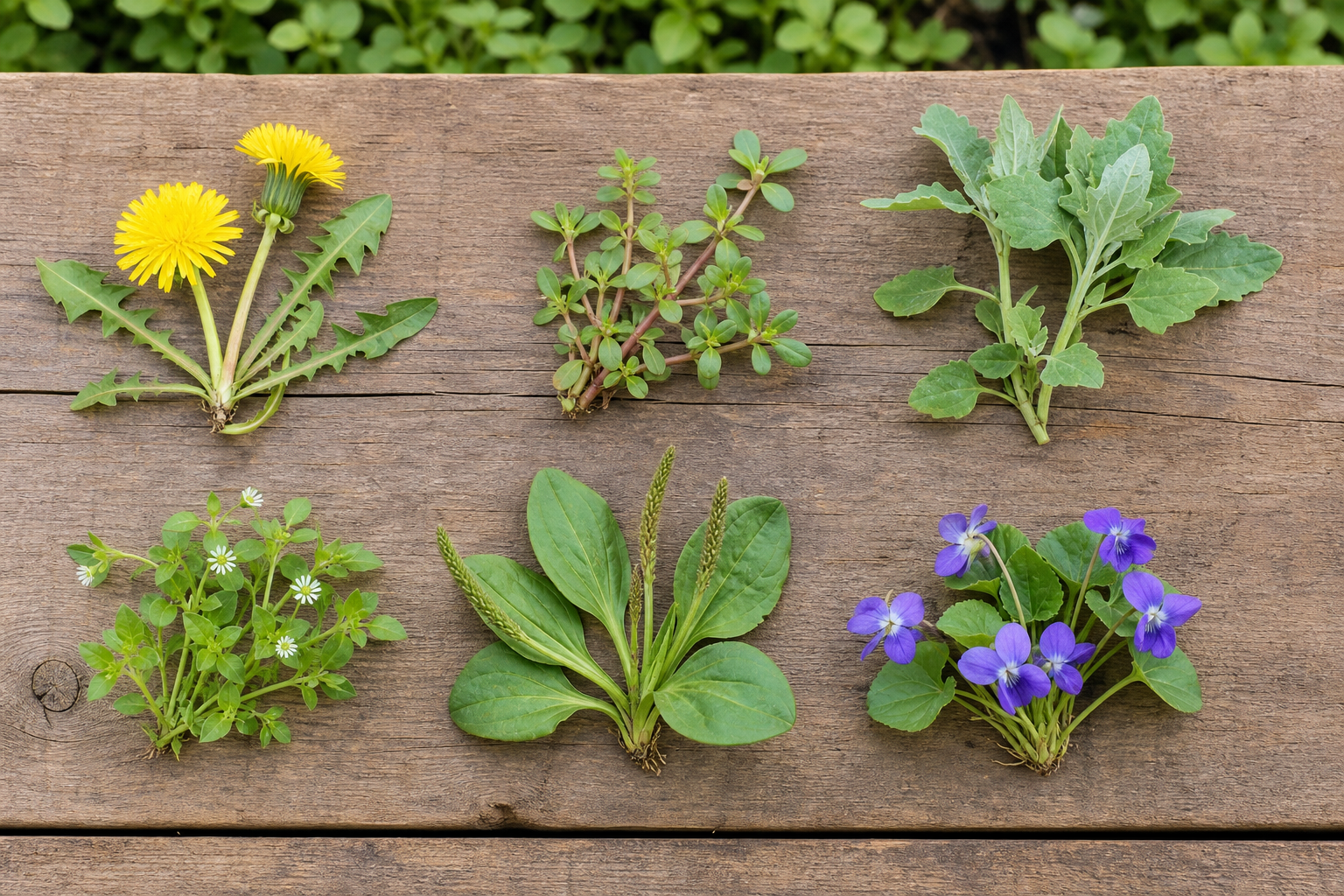
6 Edible Plants You May Be Mowing Down
1. Dandelion
Dandelion is one of the most familiar edible lawn plants. It grows in a low rosette of toothed leaves and sends up hollow stems topped with bright yellow flowers. Later, those flowers become the fluffy seed heads that children love to blow into the wind. Common dandelion is useful because the leaves, flowers, crowns, and roots are edible.
The best leaves are young and tender, especially before the plant flowers. They have a pleasantly bitter flavor that works well with lemon juice, vinegar, garlic, olive oil, eggs, beans, potatoes, and rich cheeses. Add a few young leaves to salad, saute them with garlic, or stir them into soups. Older leaves can be tougher and more bitter, so cooking is usually better.
Dandelion flowers can be used as a cheerful garnish, cooked into fritters, infused into vinegar, or added to syrups. The roots are often roasted and used for a coffee-like drink. If you are new to dandelion, start with the leaves in small amounts and build from there.
2. Purslane
Purslane is a low-growing, succulent plant with smooth, fleshy leaves and reddish stems. It often appears in warm weather and spreads across open soil, garden beds, and thin lawns. In the kitchen, purslane is valued for its juicy texture and mild lemony tang. It can be eaten raw or cooked, and it brings a crisp bite that many cultivated greens do not have.
Use tender purslane tips in cucumber and tomato salad, tacos, sandwiches, yogurt sauces, or simple grain bowls. It can also be added near the end of cooking in soups and stir-fries. Purslane is often noted for containing omega-3 fatty acids compared with many leafy vegetables, which makes it especially interesting as a wild green.
Be careful with identification. Purslane can be confused with spotted spurge, which is not used the same way and often has a milky white sap. If a broken stem produces milky sap, do not eat it. Always confirm the plant before harvesting.
3. Lamb’s Quarters
Lamb’s quarters is sometimes called wild spinach, and that nickname makes sense once you cook it. The leaves are usually soft green, sometimes with a pale, powdery look on the newest growth. It likes disturbed soil, sunny garden edges, and places where the ground has been opened up.
Young lamb’s quarters leaves can be cooked like spinach. Add them to omelets, soups, pasta, beans, rice bowls, or a simple saute with garlic and olive oil. The flavor is mild, earthy, and easy to combine with other ingredients. It is one of the most practical edible weeds because it fits naturally into recipes where you would normally use spinach, chard, or other cooking greens.
Like spinach, lamb’s quarters contains oxalates. People who need to limit oxalate-rich foods should be cautious. Cooking and discarding the cooking water may reduce some oxalates, and using moderate portions is a sensible approach.
4. Chickweed
Chickweed is a cool-season green with small oval leaves and tiny white flowers that look like little stars. It often grows in soft mats in moist, shady, or cool parts of the lawn and garden. When fresh and young, chickweed is one of the most tender wild greens you can find.
The flavor is mild, fresh, and slightly sweet. Use chickweed raw in salads, fold it into sandwiches, blend it into pesto, or stir it into soup at the very end of cooking. Because it is delicate, it wilts quickly and is best used soon after harvesting.
A common identification clue is a single line of fine hairs along the stem, which changes sides at each pair of leaves. Still, do not rely on one clue alone. Confirm the whole plant, including leaves, stems, flowers, and growth habit.
5. Plantain
Lawn plantain is not the banana-like fruit. Broadleaf plantain and narrowleaf plantain are common yard plants that grow well in compacted soil. Broadleaf plantain has oval leaves with strong parallel veins. Narrowleaf plantain has longer, thinner leaves with similar vein patterns.
Young plantain leaves can be eaten raw if they are very tender, but they become fibrous quickly. Cooking is often better. Chop young leaves and add them to soups, stews, bean dishes, or cooked greens. The flavor is green and mild, but the texture is best when harvested early.
Plantain is also discussed in many traditional remedies, but if you are writing or cooking for food purposes, keep the focus on clean, well-identified leaves and safe culinary use. Do not use leaves from contaminated areas.
6. Wild Violet
Wild violets are charming lawn plants with heart-shaped leaves and purple, blue, white, or lavender flowers. True violet leaves and flowers are edible. The flowers make salads, desserts, drinks, and spring plates look beautiful, while the leaves can be used raw when young or cooked like other greens.
Violet leaves become slightly thickening when cooked, so they can be useful in soups. The flowers are delicate and should be added at the end of preparation. As always, make sure you are identifying true violets and not simply choosing a plant because it has purple flowers.
Quick Harvest Guide
| Plant | Best Parts to Use | Simple Kitchen Idea |
|---|---|---|
| Dandelion | Young leaves, flowers, roots | Saute leaves with garlic or add flowers to salad |
| Purslane | Tender stems and leaves | Add raw to cucumber and tomato salad |
| Lamb’s quarters | Young leaves | Cook like spinach in omelets or soups |
| Chickweed | Tender leaves and stems | Use raw in salad or blend into pesto |
| Plantain | Young leaves | Chop and cook in soups or beans |
| Wild violet | Leaves and flowers | Use flowers as garnish and leaves in greens dishes |
How to Turn Lawn Greens Into Real Meals
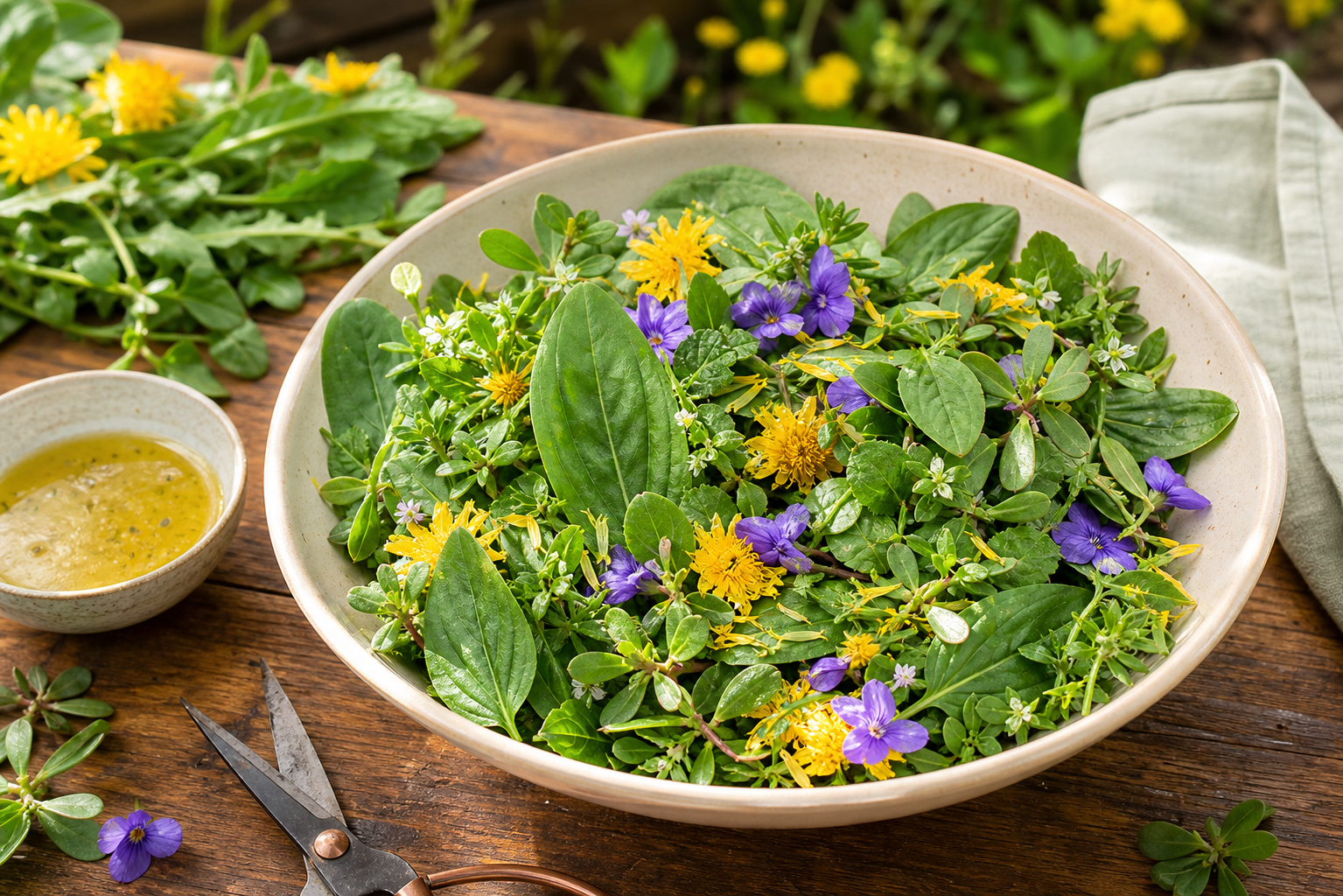
The easiest way to begin is to mix wild greens with familiar ingredients. A full bowl of bitter dandelion leaves may be too strong for a beginner, but a handful mixed with lettuce, chickweed, purslane, lemon juice, olive oil, and toasted seeds can taste fresh and balanced.
For a simple cooked dish, saute lamb’s quarters and young dandelion leaves with garlic, olive oil, salt, and a squeeze of lemon. Serve them with eggs, potatoes, beans, or rice. For a bright summer salad, combine purslane, cucumber, tomato, red onion, parsley, and a lemon vinaigrette. For a spring garnish, scatter violet flowers over salad, yogurt bowls, or desserts.
Think of edible weeds as flavor boosters. They do not need to replace all your grocery greens. Instead, they can stretch what you already buy, add seasonal variety, and help you notice your yard in a new way. A small harvest can be enough to make a meal feel special.
Backyard Foraging Do’s and Don’ts
- Do identify every plant with confidence before eating it.
- Do harvest only from clean, unsprayed areas you control.
- Do wash wild greens thoroughly before using them.
- Do start with small portions when trying a new plant.
- Do harvest gently so the plant patch can keep growing.
- Don’t eat plants from roadsides, sprayed lawns, public parks, or unknown soil.
- Don’t rely only on an app for identification.
- Don’t assume every plant with a familiar-looking leaf or flower is edible.
Frequently Asked Questions
Are lawn weeds really safe to eat?
Some lawn weeds are edible, but safety depends on correct identification and clean growing conditions. Never eat plants from chemically treated lawns, polluted soil, roadsides, or areas with pet waste. If you are unsure, do not harvest.
What is the easiest edible lawn plant for beginners?
Dandelion is often one of the easiest to recognize, but beginners should still confirm the plant carefully. Chickweed and purslane are also useful, but they require attention to look-alikes and growth habits.
Can I eat edible weeds raw?
Some can be eaten raw when young and clean, such as chickweed, purslane, violet flowers, and tender dandelion leaves. Others are often better cooked, especially lamb’s quarters, older dandelion leaves, and plantain leaves.
How often can I harvest from my lawn?
Harvest lightly and only what you will use. Taking small amounts helps the plants regrow and gives you time to learn which greens you enjoy most. It also keeps your lawn from being stripped or damaged.
Final Thoughts
Your lawn may be more than grass. It may be growing edible, useful plants that have been hiding in plain sight. Dandelion, purslane, lamb’s quarters, chickweed, plantain, and wild violet are reminders that food does not always come from a store shelf. Sometimes it grows quietly under your feet.
Start slowly, learn carefully, and harvest only from safe places. Once you do, mowing the lawn may never feel quite the same. You are no longer just cutting grass. You are noticing a living pantry, and you may be saving some of it for dinner.
Helpful references: Utah State University Extension, University of Minnesota Extension, West Virginia University Extension, and EPA lawn and garden safety guidance.