Understanding Soil Types for Better Plant Selection
Before you blame watering issues or unfortunate luck, take a moment to analyze the soil you are working with. By grabbing a handful of soil from your garden bed and squeezing it, you can determine which types of plants will thrive. Different soil types offer unique characteristics that influence plant survival and growth. For a more in-depth understanding of this process, consider reading about the squeeze test for soil texture.
Sandy Soil
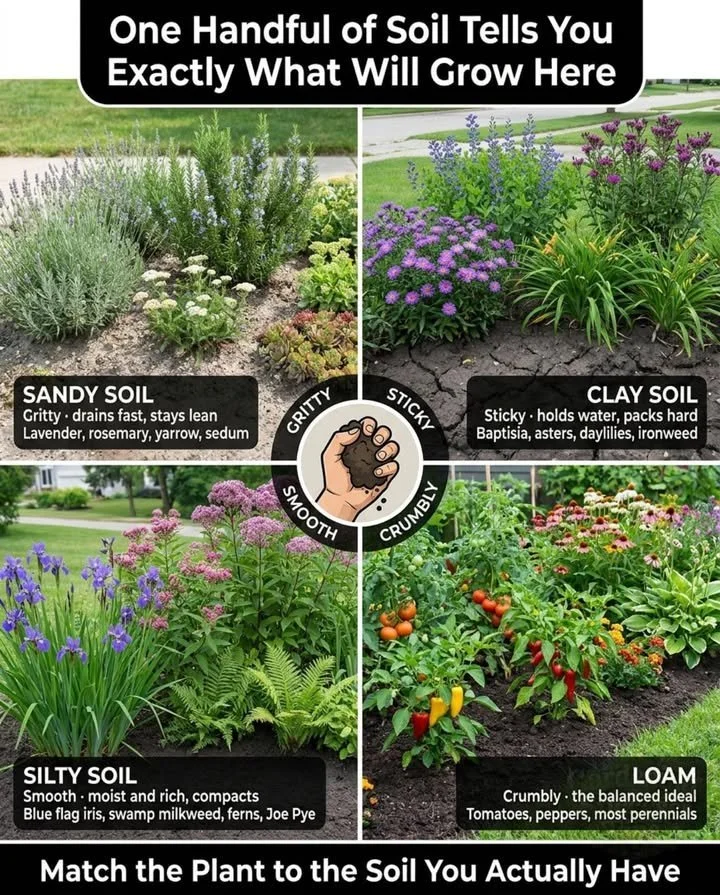
Sandy soil is identified by its gritty texture and tendency to fall apart immediately after being squeezed. This type of soil drains quickly and retains little moisture, making it ideal for deep-rooted, drought-adapted plants such as lavender, rosemary, yarrow, and sedum. It’s crucial to understand that these plants will struggle in wetter environments. If you want to learn more about optimizing your gardening strategies, it’s wise to look into plants adapted to summer heat.
Clay Soil
On the other hand, clay soil feels sticky and can be rolled into long ribbons. This heavy soil holds water well and can become compacted, which means it requires sturdy-rooted plants that can push through, such as baptisia, asters, daylilies, and ironweed. Knowing how to choose plants based on soil type is vital for a flourishing garden. For example, many perennials thrive in heavy clay soil due to their robust root systems.
Silty Soil
Silty soil consists of fine particles that feel smooth and floury. It retains moisture effectively, making it fertile but prone to compaction. Plants that thrive in silty soil include blue flag iris, swamp milkweed, ferns, and Joe Pye weed. If you’re curious to see what your plant roots might indicate about the underground conditions, you can check what your plant roots reveal. You may also find Avoid Failed Houseplant Arrangements Matching Plants To Pot useful.
Loam Soil
Loam is often regarded as the most balanced soil type, holding its shape but crumbling easily when pressed. It offers excellent drainage and nutrition for plants, thus supporting a diverse array of flora, including popular garden choices such as tomatoes and peppers. If you’re interested in maximizing your garden’s yield, investigating methods like using tomato suckers could be beneficial.
Conclusion
Choosing the right plants for your garden can significantly impact their health and productivity, so understanding your soil type is crucial. For more information about selecting suitable soil types, you can visit this guide on how to choose the right soil type for your garden. Additionally, for comprehensive insights on soils and fertilizers, the UC Master Gardeners of Orange County provide valuable resources at their official site.