
Companion Planting for Peppers: Enhance Growth and Health
A pepper plant thriving in isolation faces numerous challenges, from regulating its temperature to warding off pests. However, when surrounded by carefully chosen companions, a pepper can benefit from shade at its root zone, confusion among pests due to the scent of neighboring plants, and a cooler, balanced soil environment. These companions are not mere decorations; they actively help reduce the workload of the pepper plant and promote healthier growth. You may also find Irresistible Greek Potatoes With Lemon And Garlic useful.
Why Choose Companion Plants for Peppers?
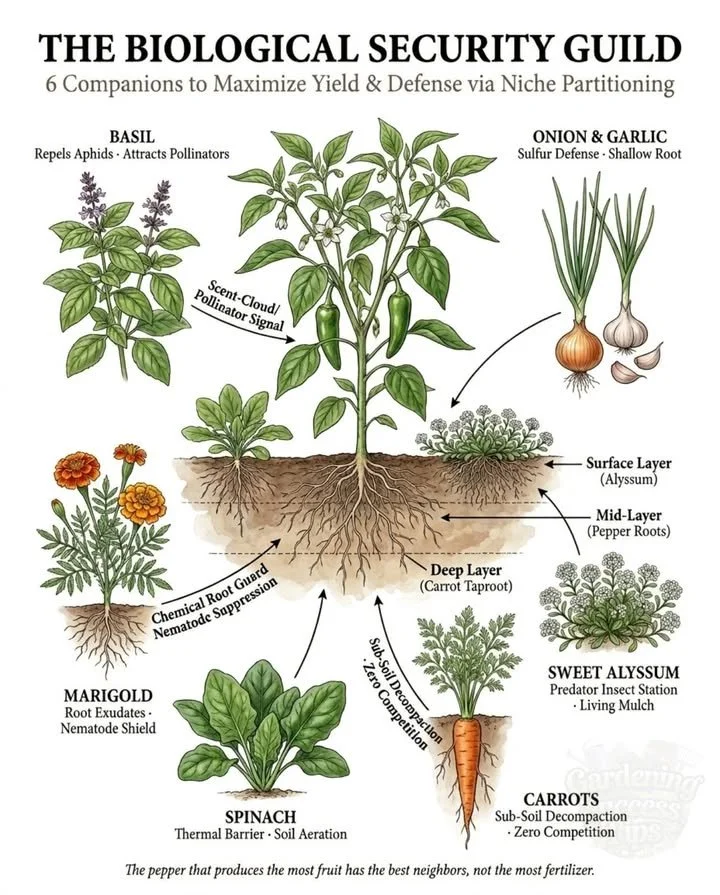
Choosing the right companions for your peppers can bring multiple advantages. For example, planting French marigolds alongside your peppers can confuse pest insects that rely on smell, helping to protect your crop from problems like aphids and flea beetles. The roots of marigolds also deter root-feeding pests from the surrounding soil, providing an additional layer of defense.
Onions or chives are excellent choices as well; their sharp allium scent can thwart flying pests. Position these near pepper plants, as they take up minimal space and require no special care. You may also find Keto Creamy Tuscan Zucchini Noodles With Sausage useful.
Choosing Shade Providers
A low-growing plant like sweet alyssum serves as an effective living mulch that can help to keep the soil cooler during the heat of the day while also attracting beneficial insects. Their flowers attract hoverflies, which can help control aphid populations, rendering them one of the most beneficial companions in any vegetable bed. Additionally, leafy vegetables such as spinach or lettuce can be interplanted early in the season to shield the soil from heat. They can be harvested before the peppers need more space, thereby facilitating a mutually beneficial relationship. You may also find Cheesy Taco Potatoes Incredible useful.
Nutrient and Moisture Management
Consider adding carrots to your garden as they have deep taproots that can draw moisture from lower soil layers, thus minimizing competition for resources. The channels left by the carrot roots can also help aerate the soil, making it more hospitable for subsequent plantings. Another strong companion is basil, whose aromatic leaves can mask the scent of peppers from pest scouts. Position basil within a few inches of the pepper plants to create overlapping scent zones that deter pests. You may also find Coconut Dome With Chocolate useful.
Best Practices for Planting Companions
When planting companions for your peppers, timing is essential. It’s best to sow companion plants at the same time or slightly before transplanting your peppers to give them a head start. Additionally, keeping taller companion plants to the north of your pepper bed ensures they do not cast shade on the peppers, which crave full sunlight for optimal growth. Let plants like alyssum and spinach grow right up to the base of the pepper stem to provide protection from heat and moisture evaporation without competition for resources.
By leveraging companion planting techniques, you can create a thriving environment for your peppers, effectively turning solitary plants into a community of helpers. With the right companions, a pepper plant not only survives but flourishes with the support of its neighboring flora.
Conclusion
Companion planting is not just a strategy; it’s a way to cultivate a more resilient and productive garden. For more insights on edible gardening choices, consider exploring these perennial vegetables that can enhance your garden’s longevity. To learn about practical gardening methods and inspiration, check out this Lemon8 gardening guide.