Quick answer: your insecticidal soap can stay unused more often when the garden is designed as a living pest-control system. For tomatoes, cabbage, and lettuce, the strongest no-spray setup combines French marigolds, nasturtiums, flowering dill, straw mulch, and ground beetle habitat. These elements do not create a magic pest-proof garden, but they reduce pest pressure, attract natural enemies, protect soil, and make problems easier to catch before they explode.
The goal is not to kill every insect. A healthy vegetable garden needs pollinators, decomposers, predators, and a small amount of prey to keep the system active. When you build habitat and plant diversity into the bed, the garden starts doing some of the work for you. You still scout. You still remove badly infested leaves. You still intervene when needed. But you are no longer relying on a spray bottle as your first line of defense.
Why the Best Pest Control Starts Before Pests Arrive
Most gardeners wait until the tomato leaves curl, cabbage leaves are chewed, or lettuce is covered in aphids. Then the question becomes urgent: what can I spray? Insecticidal soap can be useful for soft-bodied pests such as aphids, whiteflies, and mites, but it works on contact and has little residual effect. That means it does not rebuild the garden ecosystem. It only handles the insects it touches.
A better strategy begins earlier. Integrated pest management, often called IPM, asks you to prevent problems, monitor plants, identify pests correctly, protect beneficial insects, and use the least disruptive control that actually solves the issue. In a home vegetable garden, that can be surprisingly simple. You can plant flowers that attract predators. You can use trap crops that reveal pest pressure early. You can mulch the soil so beneficial ground hunters have shelter. You can leave some herbs to bloom instead of harvesting every stem.
This is the “garden that protects itself†idea. It is not passive. It is designed. Once the system is built, the garden becomes harder for pests to dominate because there are more checks and balances already in place.
The 5 No-Spray Systems Working in the Bed
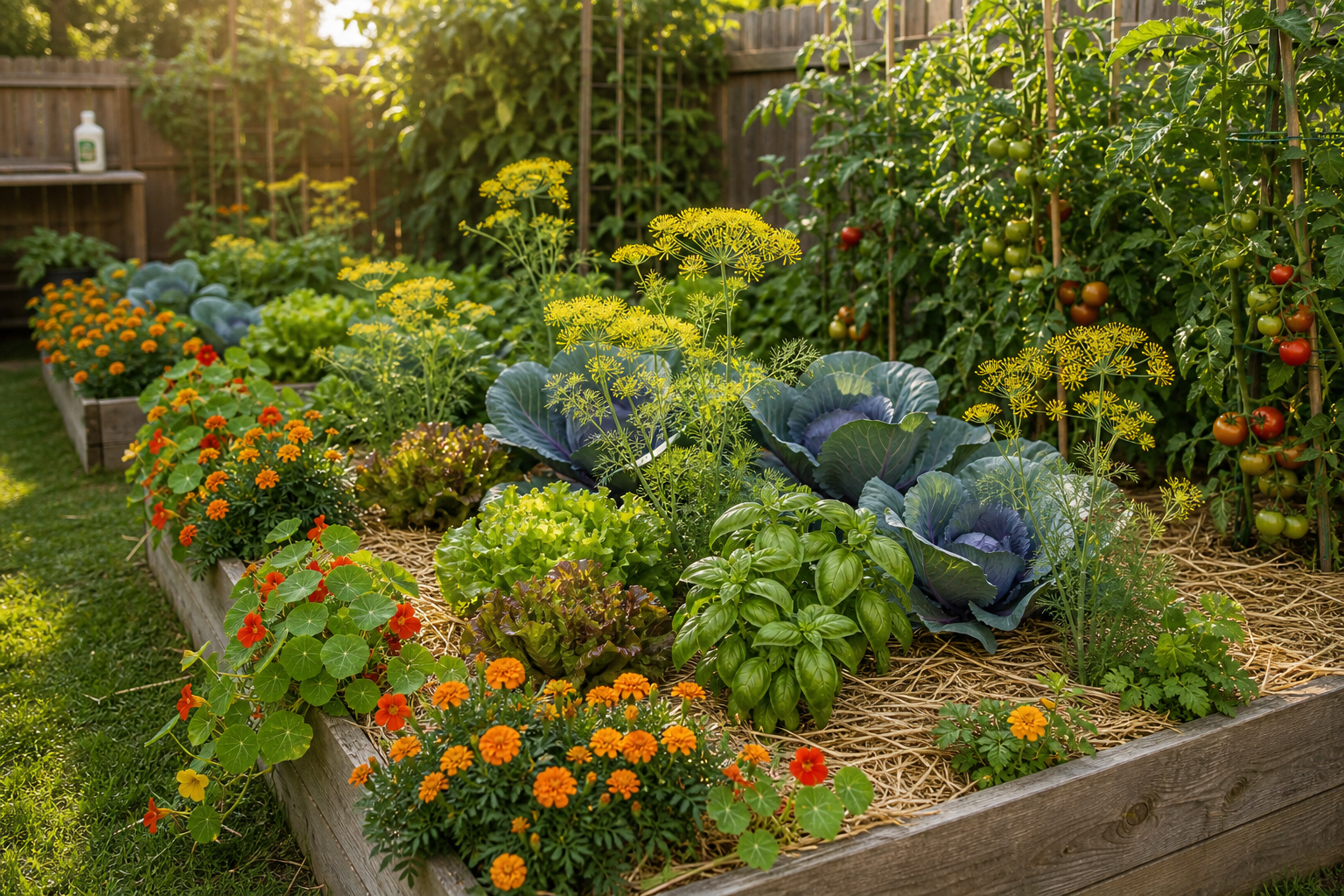
For tomatoes, cabbage, and lettuce, the most useful layout is a mixed bed with vegetables, insectary flowers, trap plants, mulch, and undisturbed shelter. Each piece has a different job. Together, they create a garden that is easier to manage than a bare bed of single crops.
| System | Main Role | Best Placement | What It Helps With |
|---|---|---|---|
| French marigolds | Diversity, root-zone support, pest confusion | Edges and between slower crops | Nematode management when used correctly, general biodiversity |
| Nasturtiums | Trap crop and early warning plant | Bed corners and cabbage edges | Aphids, flea beetle pressure, cabbage pest monitoring |
| Flowering dill | Beneficial insect buffet | Near cabbage and lettuce, not shading them | Hoverflies, tiny wasps, pollinators, predator support |
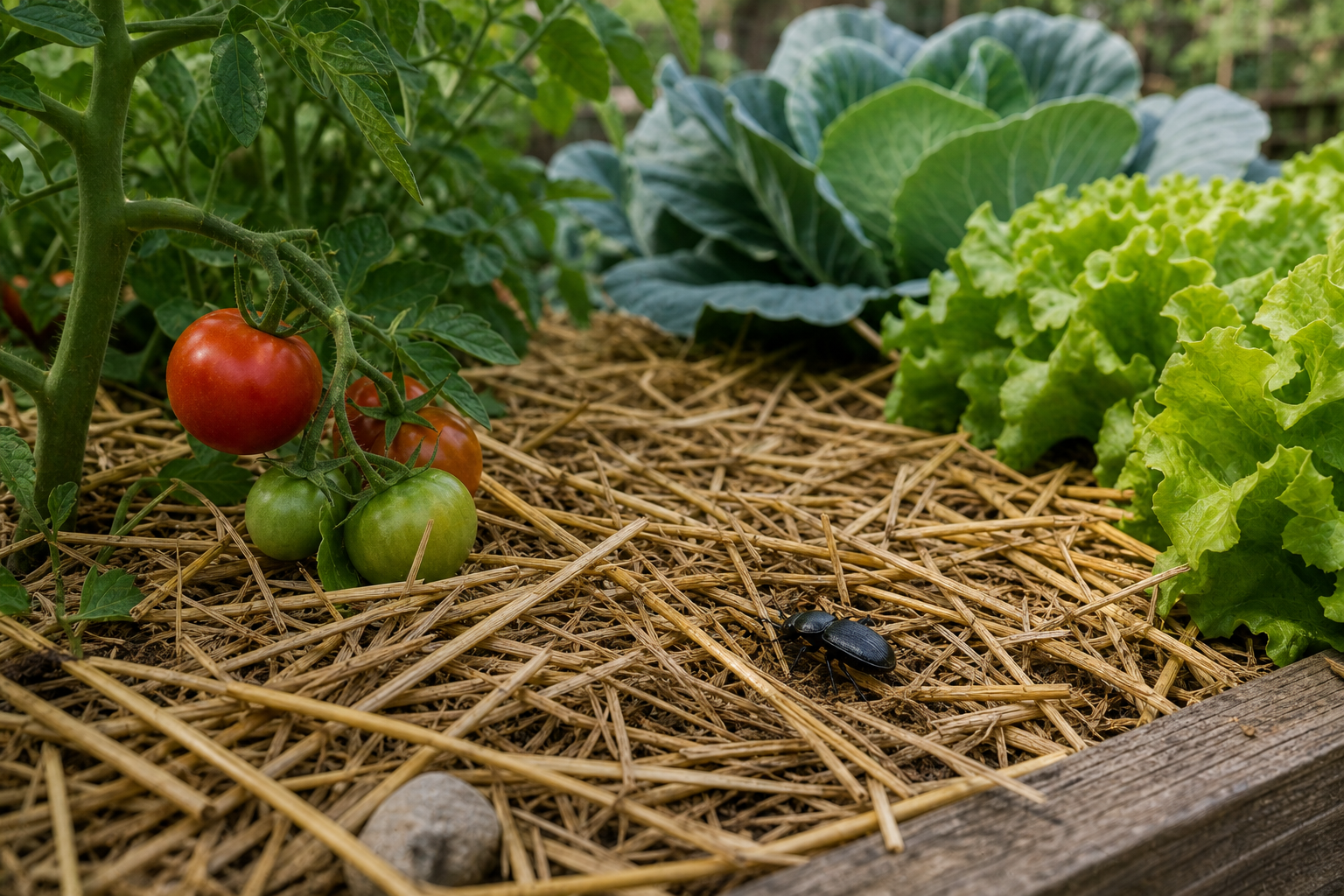
| Straw mulch | Soil cover and shelter | Around tomatoes, cabbage, and paths | Weeds, soil splash, moisture swings, predator habitat |
| Ground beetles | Night patrol predators | Under mulch, boards, stones, and undisturbed edges | Slugs, larvae, cutworms, soil-level pests |
1. French Marigolds: The Bright Border With a Real Job
French marigolds are often described as pest-repelling flowers, but the truth is more specific and more useful. They are best known for their relationship with certain root-knot nematodes, especially when grown as a dense planting or rotation crop before a susceptible vegetable. A few marigolds tucked into a bed will not magically erase every underground pest, but they can still be valuable as part of a mixed planting.
In a tomato, cabbage, and lettuce bed, French marigolds add color, break up the visual and scent profile of the bed, and bring flower resources for insects. Their compact growth makes them easy to fit along edges, between tomatoes, or near cabbage where they will not overwhelm the main crop. They also make the garden easier to scout because their bright flowers draw your eye to the bed every day.
For best results, plant French marigolds in groups instead of scattering one lonely plant in a corner. Keep them watered during establishment, pinch off tired blooms, and avoid burying them under tomato foliage. If nematodes are a known problem in your soil, use marigolds as part of a larger plan that includes crop rotation, resistant varieties, and clean transplants.
2. Nasturtiums: The Trap Crop That Tells on Aphids
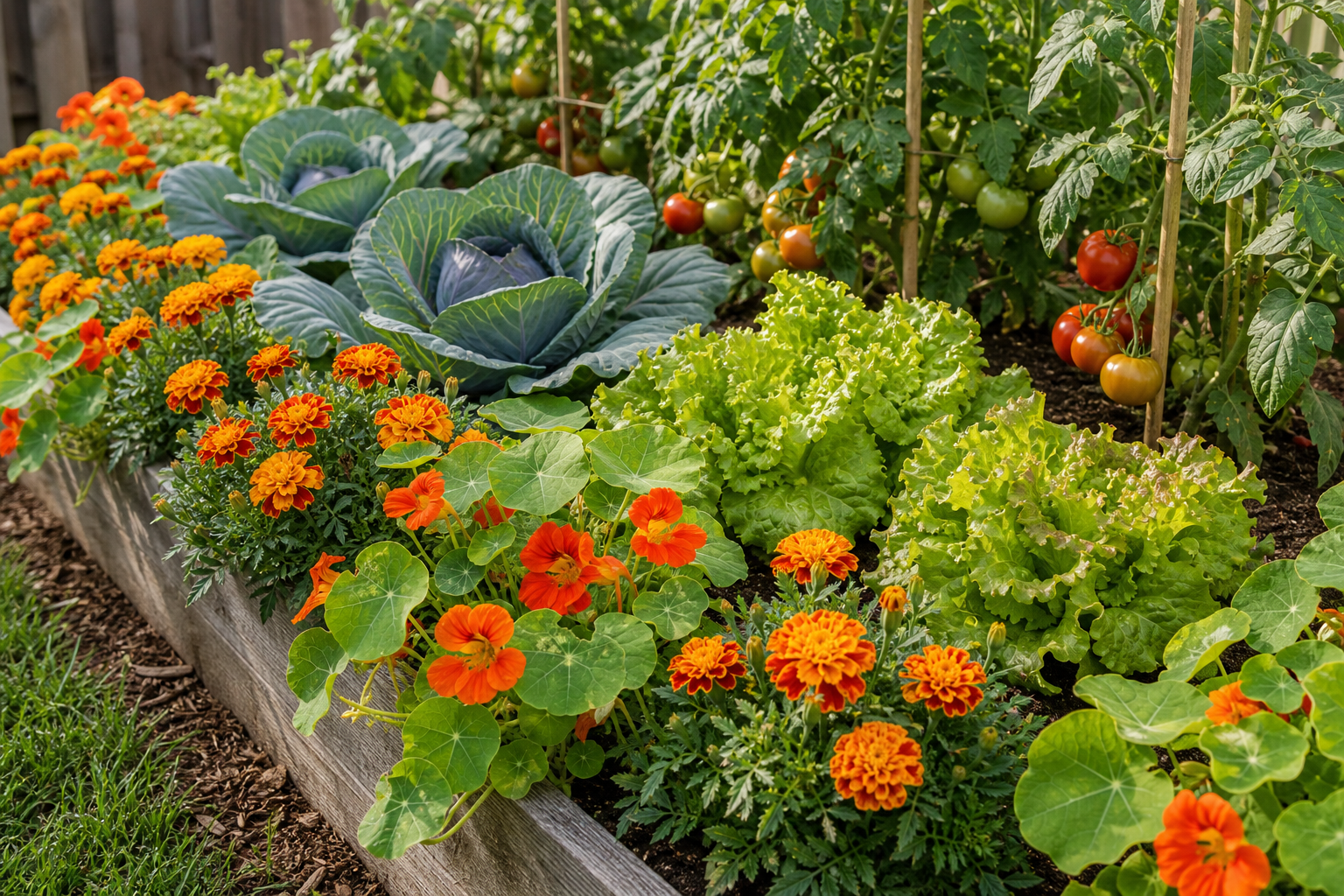
Nasturtiums are one of the easiest flowers to use in a vegetable garden because they grow quickly, trail beautifully, and attract attention from aphids. That can sound like a problem until you understand the strategy. A trap crop is a plant that pests prefer or find easily, giving you a place to monitor and manage them before they spread across your main crops.
Place nasturtiums near the edge of cabbage and lettuce beds or in corners where you can inspect them often. If aphids gather on nasturtiums, you can pinch off the worst leaves, rinse the plant with water, or remove a heavily infested stem before the colony expands. This is much easier than discovering aphids hidden deep inside lettuce heads.
Nasturtiums can also help you notice cabbage pest pressure. They are not a guaranteed shield against imported cabbageworms or cabbage white butterflies, but they make the bed more diverse and give you another plant to inspect when butterflies are active. The key is scouting. A trap crop only works when you actually check it.
3. Flowering Dill: The Beneficial Insect Magnet
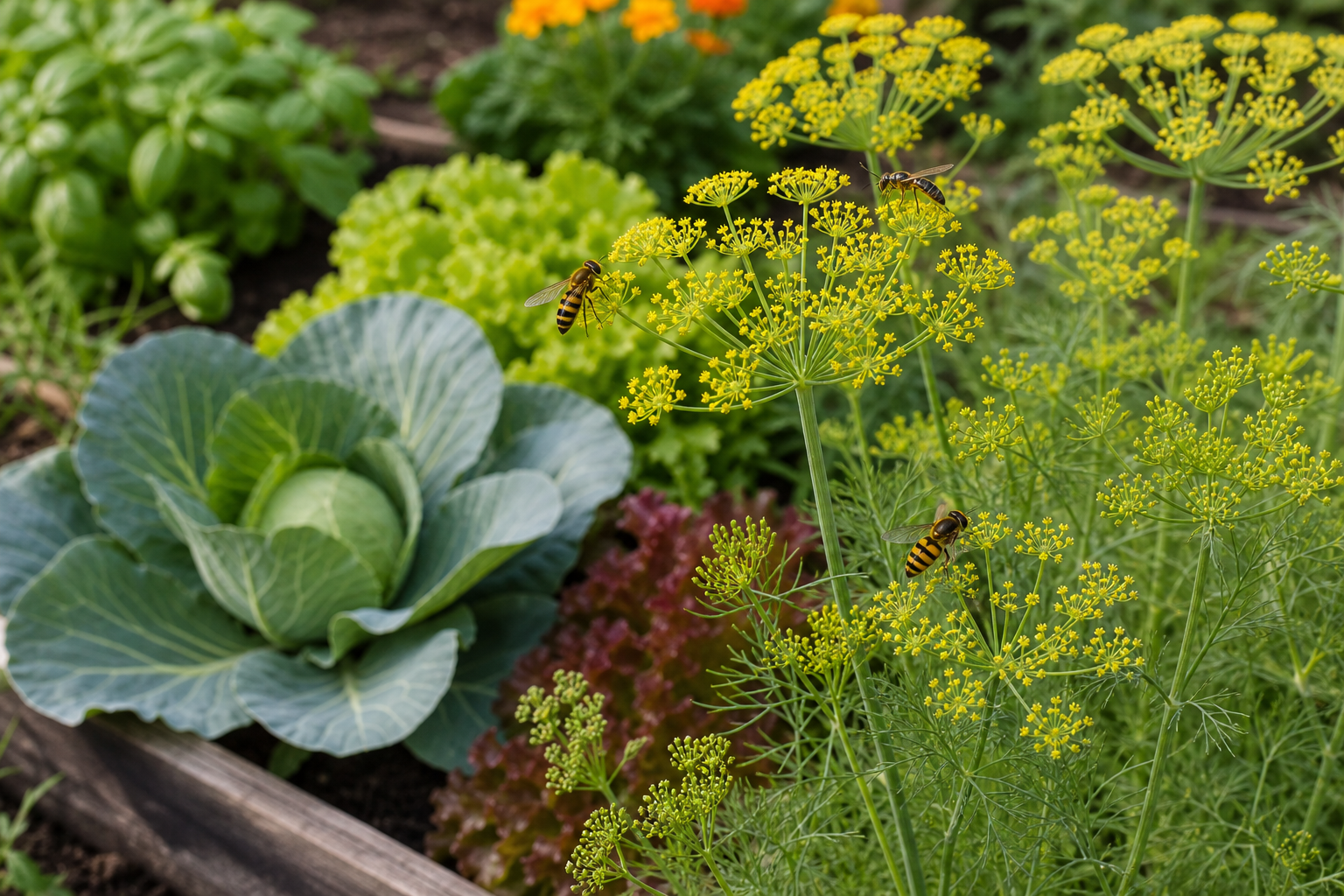
Dill becomes much more powerful when you allow some of it to flower. The yellow umbrella-shaped blooms are easy for small beneficial insects to access. Hoverflies, tiny parasitoid wasps, and other helpful insects often use small flowers as nectar and pollen sources. Their larvae or offspring may feed on aphids, caterpillars, or other pests depending on the species.
This matters for cabbage and lettuce because soft-bodied pests can multiply quickly in cool or mild weather. It also matters for tomatoes because a garden full of beneficial insects is less likely to let one pest become the only story. Flowering dill acts like a tiny insect cafeteria placed right where the vegetables need backup.
Plant dill where it will get sun but not shade young lettuce. Let a few plants bolt and bloom instead of harvesting them all. Succession sow dill every few weeks if you want a longer bloom window. If the garden is small, one or two flowering dill plants can still make a difference because they provide a steady focal point for beneficial insect activity.
4. Straw Mulch: Weed Suppression, Soil Protection, and Shelter
Bare soil makes the garden work harder. It dries faster, grows more weeds, splashes soil onto leaves during rain, and leaves fewer hiding places for beneficial ground-dwelling predators. Straw mulch solves several of those problems at once. Around tomatoes, cabbage, and lettuce, a clean straw layer can reduce weed pressure, moderate moisture swings, and protect lower leaves from soil splash.
Mulch also creates daytime shelter for ground beetles, spiders, and other predators that hunt at night or at soil level. A completely clean, constantly disturbed bed is not friendly to those allies. A mulched bed gives them a place to hide, move, and survive between meals.
Use straw that is clean and not full of weed seeds. Apply it after the soil has warmed and seedlings are established. Keep mulch a little away from plant crowns and tomato stems to reduce moisture problems. In slug-heavy gardens, avoid making the mulch too thick around tender lettuce, and scout under boards or mulch edges so slugs do not quietly multiply.
5. Ground Beetles: The Night Patrol You Rarely See
Ground beetles are among the most useful insects in a vegetable garden, but they do not behave like showy pollinators. Many are active at night and hide during the day under mulch, stones, leaves, boards, or garden edges. That means gardeners often miss them unless they lift mulch or walk the garden after dark.
These beetles and their larvae can prey on soil-level pests such as slugs, caterpillars, larvae, and other small invertebrates. They are not a complete pest-control solution by themselves, but they are part of the reason a diverse, mulched, low-disturbance garden can be more resilient than a bare one.
To keep ground beetles working, avoid unnecessary tilling, leave some protected edges, use organic mulch, and avoid broad-spectrum insecticides. If every insect is treated as an enemy, the garden loses the predators that help prevent pest outbreaks.
Where Insecticidal Soap Still Fits
Unused insecticidal soap is a good sign when the garden is balanced, but it is not a failure if you need it occasionally. Insecticidal soap is most useful for soft-bodied pests, and it must contact the pest directly. It does not keep killing for days after application, which makes it less disruptive than many harsher products but also means coverage matters.
Use it only after identifying the pest and checking whether beneficial insects are already present. Spray in cooler parts of the day, avoid open flowers when pollinators are active, and test a small section of the plant first because some crops can be sensitive. Follow the product label exactly. More soap is not better; it can damage leaves.
The best use of insecticidal soap is targeted intervention, not routine spraying. If one lettuce plant has aphids and no predators are present, a careful application may help. If a nasturtium leaf is loaded with aphids, clipping that leaf may be better than spraying the whole garden. GoldVIP gardening is about choosing the smallest effective action.
A Simple Layout for Tomatoes, Cabbage, and Lettuce
Put tomatoes on the north side of the bed if you are in the Northern Hemisphere so they do not shade everything else. Stake or cage them early. Plant cabbage where it has enough room for airflow. Place lettuce in partial shade from taller plants as summer heat builds. Add French marigolds along the front and between slower-growing vegetables. Let nasturtiums trail over corners. Plant dill near cabbage and lettuce, but give it enough space to bloom without smothering them.
Mulch the walking edges and open soil with straw once seedlings are stable. Keep one small undisturbed corner with mulch, a flat stone, or a board as beetle shelter. Scout twice a week. Look under cabbage leaves for eggs and caterpillars. Check lettuce hearts for aphids. Inspect tomato undersides for mites or whiteflies. Watch the nasturtiums first because they often reveal aphid pressure early.
Frequently Asked Questions
Can companion planting replace insecticidal soap completely?
Not always. Companion planting reduces pressure and supports beneficial insects, but outbreaks can still happen. Insecticidal soap remains useful as a targeted tool when soft-bodied pests exceed what the garden can balance naturally.
Do French marigolds really repel pests?
French marigolds are most credible for helping manage certain root-knot nematodes when used correctly, often as a dense planting or rotation. In mixed beds, they also add diversity and flowers, but they are not a universal pest shield.
Why plant nasturtiums if they attract aphids?
Because that attraction can make them useful as a trap crop and early warning plant. If aphids gather on nasturtiums, you can remove infested leaves before the pests spread deeply into lettuce or cabbage.
Will straw mulch cause slugs?
Mulch can create moist shelter, which is good for beneficial predators but may also favor slugs in damp gardens. Use a moderate layer, keep it away from lettuce crowns, and scout regularly under mulch edges.
Are ground beetles harmful to vegetables?
Ground beetles are generally considered beneficial outdoors because many feed on other insects and soil-level pests. They do not damage buildings, clothing, or stored food, and they are not the enemy in a vegetable bed.
Final Takeaway
A garden that protects itself is not a garden you ignore. It is a garden you design so every element has a job. French marigolds add diversity and root-zone support. Nasturtiums act as visible trap crops. Flowering dill feeds beneficial insects. Straw mulch protects soil and creates habitat. Ground beetles patrol the night shift.
When those systems work together, your tomatoes, cabbage, and lettuce become easier to protect with fewer sprays. The insecticidal soap can stay on the shelf longer, and when you do use it, you use it with purpose instead of panic.
Helpful references: Clemson Extension on less-toxic insecticides and insecticidal soap, University of Minnesota Extension on companion planting, UC IPM on root-knot nematodes, University of Maryland Extension on aphids in vegetable gardens, and Wisconsin Extension on ground beetles.