Understanding Pepper Growth and Transplanting
When it comes to planting peppers, many gardeners mistakenly treat them like tomatoes. However, these two plants have significantly different needs, particularly when transitioning from seedlings to the garden. To ensure a fruitful harvest, it’s essential to understand how to properly support pepper plants during this critical period. You may also find Tomato Suckers Free Plants From Pinched Off Shoots useful.
The Importance of Timing
The timing of your transplanting can significantly impact the growth of your peppers. For instance, gardeners should aim to plant peppers when nighttime temperatures consistently remain above the mid-50s. As peppers thrive in warmer conditions, a chill in the first week after transplanting can cause them to stall, potentially delaying growth for weeks. You may also find Creamy Keto Low Carb Stuffed Bell Peppers useful.
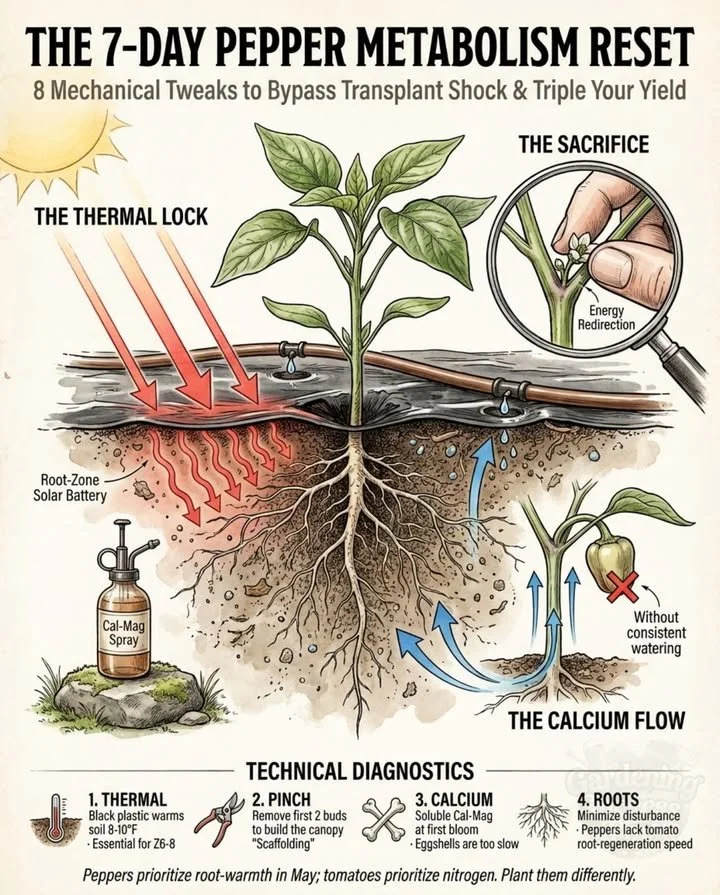
To facilitate healthy growth, consider warming the soil before planting. A great way to achieve this is by laying down black plastic mulch a week or two in advance, which helps to increase the soil temperature, keeping the roots active from the start. Without this preparation, cool spring soil can slow down root development, even if the air temperature is pleasant.
Key Strategies for Successful Pepper Gardening
Soil Temperature: Maintaining an optimal soil temperature is crucial for pepper plants. If you’re looking to grow other tropical houseplants, you might find useful tips in this guide on how to grow tropical houseplants from fruit pits in water.
Pinching Flower Buds: It’s advisable to pinch off the first flower buds. While this may seem counterintuitive, doing so allows the plant to establish a robust frame before it starts producing fruit. A pepper that focuses on building structure first will yield a more substantial harvest later in the season.
Watering Consistency: Another common mistake is inconsistent watering. Blossom end rot, often attributed to low calcium levels, is frequently the result of fluctuating moisture levels. To prevent this, aim to provide steady and even moisture that helps transport calcium to the developing fruit.
Managing Pest Control
To ensure that your pepper plants thrive, it’s also vital to manage pests effectively. Strong-scented plants can deter garden pests when living as a border. This strategy can create a protective environment for your peppers, minimizing the need for chemical pesticides.
Multiple Harvests from Your Crop
Pepper plants can reward you with multiple harvests when cared for properly. Following the right practices can help a single plant produce through the season, ensuring your gardening efforts pay off. For more insights into improving your crop yield, explore how to achieve multiple harvests from crops that regrow.
Conclusion
In summary, understanding the unique requirements of peppers is essential for successful gardening. By focusing on timing, soil temperature, proper pinching of buds, and consistent watering, your pepper plants will have a fruitful season ahead. For further gardening insights, you might find this resource about how to better treat peppers compared to tomatoes useful. Additionally, check out Kim Carlisle’s tips toward better gardening for more expert advice.