The Benefits of Using Ollas in Your Garden
Every evening, many gardeners find themselves in a tedious routine: uncoiling the hose, dragging it to the bed, and guessing how much water is enough for their plants. Surprisingly, half the water often runs off the surface or evaporates before it even reaches the roots. This is where ollas come into play, utilizing an ancient method rooted in physics that has been effective for thousands of years. You may also find Banana Bread Recipe My Favorite Moist Loaf useful.
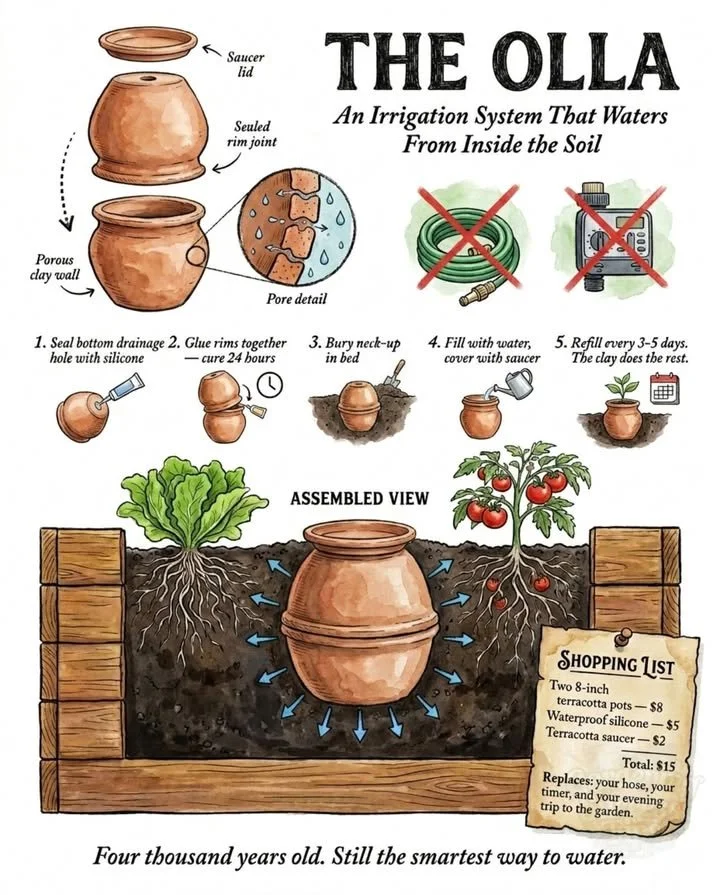
An olla consists of two unglazed terracotta pots sealed together, buried neck-up in the soil. When filled with water, the porous clay allows moisture to seep through the walls and directly into the dry soil, delivering water to the root zone when it’s needed most. This method eliminates the need for timers or drip emitters, both of which can clog and lead to waste. In dry climates, ollas can significantly reduce water usage as the moisture is delivered right where the feeder roots are waiting. You may also find Cheesecake Factory Italian Lemon Cream Cake 2 useful.
How to Build Your Own Olla
Creating your own olla is a straightforward process that can significantly enhance your watering strategy. The build typically takes about twenty minutes, and all you’ll need are two standard nursery pots and some silicone. The materials and steps are as follows: You may also find Comforting Italian Sausage Potato useful.
- Select two unglazed terracotta pots and ensure that one has a drain hole.
- Seal the drain hole of one pot with silicone and allow it to cure overnight.
- Join the two pots together rim-to-rim securely using silicone.
- Bury the vessel in the center of your bed, ensuring the open neck is above the soil line.
- Fill the pot with water and top it off every few days based on the surrounding heat and plant quantity.
Using one olla, you can expect to effectively water a radius of approximately two feet. If you have a larger garden or raised bed, consider sinking two or three ollas for optimal hydration.
The Advantages of Using Ollas
Utilizing ollas offers numerous benefits beyond just efficient watering. For example, they minimize the time spent managing irrigation while also preventing surface evaporation. The plants can access water directly, leading to healthier growth. You can also pair this method with other garden strategies. For instance, after enjoying a delicious meal, you may find yourself with leftover chicken that can be utilized in a recipe with comforting leftover rotisserie chicken, making your kitchen and garden efforts more productive.
Moreover, consider the versatile application of ollas alongside other water-conscious gardening techniques. You might also be interested in how to incorporate other flavors and ingredients, such as when preparing irresistible Greek potatoes with lemon and garlic, which pairs wonderfully with fresh vegetables from your garden.
Final Thoughts
Not only does using ollas in your garden provide a simple yet effective irrigation system, but it also fosters a sustainable gardening practice that conserves water. By reducing waste and minimizing watering efforts, you can nurture your plants in an environmentally friendly manner that reflects efficient garden management.
Conclusion
In an age where conservation is crucial, incorporating traditional methods like ollas can significantly improve your gardening experience. For more insights on managing pressure when using the olla system, you may find this resource by the pressure – RUcore helpful. Additionally, if you’re interested in understanding more about cave studies related to gardening and water conservation, check the report from the AMCS – Association for Mexican Cave Studies. These resources can deepen your knowledge and appreciation for both ancient and modern gardening techniques.