The Benefits of Living Groundcover Over Traditional Mulch
When it comes to maintaining a vibrant garden, the choice of groundcover can significantly affect plant health, weed suppression, and the ecosystem of your space. While wood chip mulch offers some weed control, it lacks the ability to enrich the soil or support wildlife. In contrast, a living groundcover does both. Not only does it choke out weeds, but it also provides vital resources for pollinators and serves as a host for butterfly larvae. For more insights on effective groundcover options, consider this comprehensive guide on right mulch to prevent weeds and rot.
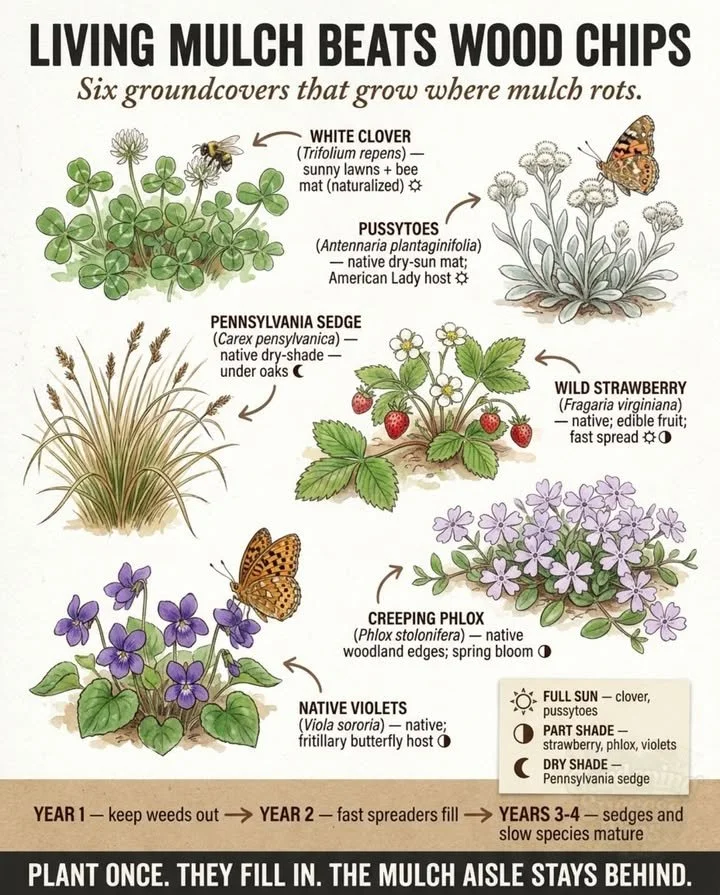
Six Low-Grow Species Worth Planting
Choosing the right plant species for your groundcover can create a more self-sustaining garden. Here are six low-growing options that thrive in various conditions: You may also find Chinese Beef And Broccoli Takeout Style useful.
- White Clover: Ideal for sunny areas, this hardy plant fixes nitrogen in the soil, helping to improve the overall health of mixed plantings.
- Pussytoes: Thriving in full sun and dry soils, this native species provides habitat for the American Lady butterfly while creating a charming silver-grey mat.
- Pennsylvania Sedge: Perfect for those dry shady spots under oak trees, this native sedge may take time to establish but is the best long-term solution for difficult areas.
- Wild Strawberry: Known for its aggressive runners, this native plant fills in fast and offers the added bonus of edible fruit.
- Creeping Phlox: This beautiful native plant tolerates strong shade and blooms in spring, adding vibrant color to woodland edges.
- Native Violets: These charming plants thrive in part shade and are essential host plants for fritillary butterflies, contributing to biodiversity in your garden.
When selecting your groundcover, ensure that you match the plant to the available light conditions. Fast growth can often be achieved by purchasing plugs or seed, ensuring a thriving garden in no time. You may also find Grandmas Famous Sweet Potato Butter Cake useful.
Establishing Your Groundcover
During the first year, it’s crucial to keep weeds at bay while your plants get established. Most plants will fill in significantly during the second year. However, for sedges and other slower-growing species, plan for a longer establishment period—years three to four may be necessary for them to thrive fully. For tips on managing your garden more effectively and insights on recipes that promote a thriving garden ecosystem, check out this Amish peanut butter cream recipe.
The value of a living groundcover cannot be overstated: it feeds the food web while effectively suppressing weeds, creating a balanced and vibrant environment. You may also find Winter Wonderland Chocolate Chip useful.
Conclusion
In summary, transitioning from traditional mulch to a living groundcover is not just beneficial for your weed management, but also for supporting local ecosystems. For those looking for personal accounts of using plants effectively, the North American folks discussing lawn alternatives may offer valuable insights. Additionally, if you’re interested in learning strategies to combat unwanted plants with ecological methods, check out Humane Gardener’s guide on plant management. By choosing the right groundcover, gardeners can foster a healthier landscape while minimizing the use of synthetic materials.