
Understanding Why Your Blueberry Bush Isn’t Producing
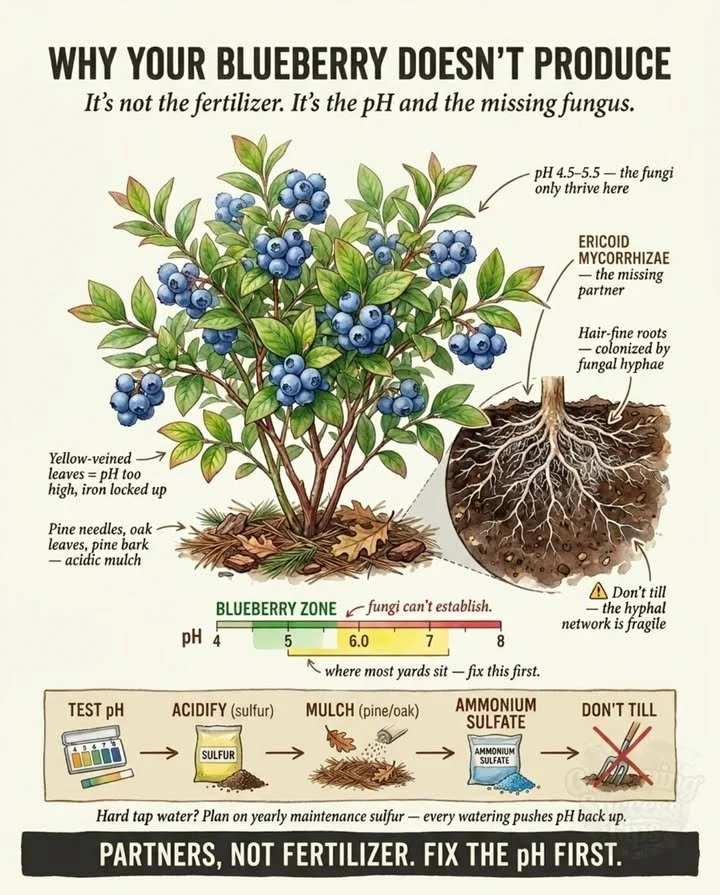
If your blueberry bush isn’t producing fruit, the issue might not be a lack of nutrients but rather a vital partnership with fungi. Blueberries thrive alongside specific fungi that help them absorb nitrogen from the soil, which is essential for their growth. When the soil pH is not acidic enough, these fungi struggle to establish, leading to nutrient deficiencies that result in poor growth and pale leaves. You may also find Banana Pudding Rolls With useful.
In many garden scenarios, regular fertilizers don’t address this underlying problem because they fail to support the fungal community essential for delivering nutrients. As a solution, understanding and improving soil conditions may be a more effective approach. Exploring techniques like companion planting can also help you create a thriving environment for your blueberry bushes.
Steps to Revitalize Your Blueberry Bush
The path to a healthy blueberry bush usually involves several key steps that can transform your garden. Start with testing your soil pH; if it exceeds 6.0, you are likely facing challenges with fungal establishment. In such cases, working elemental sulfur into the top layers of soil can slowly acidify it. This process takes patience, often requiring months before the pH levels drop adequately. You may also find Bread Pudding Incredible You useful.
Additionally, mulching with materials such as pine needles or oak leaves nourishes the acidic soil layer. This organic matter not only helps maintain the right pH but also feeds the fungi over time. Ensuring you use an acidifying fertilizer is crucial, as the type of nitrogen matters just as much as the quantity you apply.
Maintaining Soil Conditions
For ongoing health, it’s essential to avoid tilling within the root zone of your blueberry bushes. Tilling disrupts the delicate fungal network you’re working to cultivate. Instead, maintain a consistent layer of mulch to protect and enrich the soil. Be mindful of your irrigation practices too; if using hard water, be prepared to reapply sulfur annually to counteract any rises in soil pH.
Over time, the ecosystem will rebuild, and you’ll notice your blueberry bushes thriving. In addition to blueberries, consider incorporating other delicious fruits. For example, trying out refreshing watermelon lemonade ideas can provide a delightful way to enjoy the fruits of your labor.
Conclusion
In conclusion, understanding the needs of your blueberry bushes is crucial for their successful cultivation. By improving soil pH and creating a supportive ecosystem, not only will your blueberry bushes flourish, but they will also yield delicious fruits. For those looking for more resources on growing edible plants, explore this link about growing all your own food and consider reading about cover crops for home gardens. These insights can guide you further in your gardening journey.