Understanding Herb Harvesting Techniques
When it comes to cultivating a thriving herb garden, understanding the specific growth patterns of different herbs is crucial. For instance, if you cut your rosemary back to bare wood, you might expect a fresh surge of growth, but instead, you may find that it dried out and never recovered. On the other hand, if you leave your basil unpinched, it can shoot up tall and flower, but that can lead to bitter leaves within just a week. This underscores the importance of following appropriate harvesting rules. You may also find Hearty Italian Sausage Potato Soup useful.
The Difference Between Woody Perennial and Soft-Stem Annual Herbs
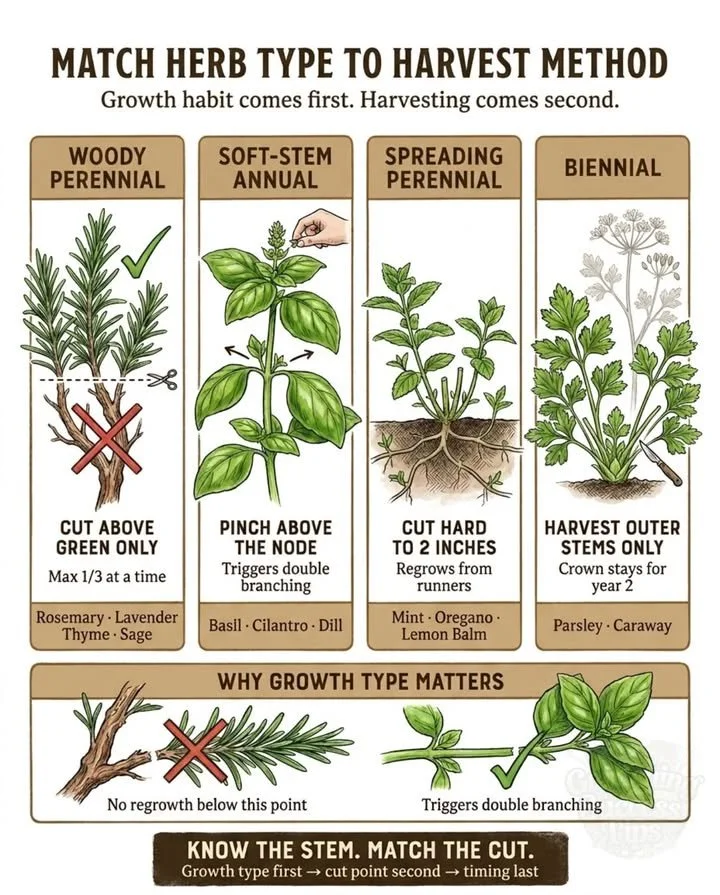
Woody perennial herbs such as rosemary, lavender, thyme, and sage develop long-lasting woody stems that cannot regenerate once stripped of green growth. This means that if you cut into bare brown wood, that branch is done for as no dormant buds will activate below the cut. Therefore, it’s important to cut above visible green growth and avoid removing more than a third of the plant at once. For a more effective approach, shape these herbs in spring once new growth appears at their base. Regular light harvesting throughout the season will keep them compact and productive for years. If you’re curious about garden conditions affecting plant growth, check out what your plant roots reveal about underground conditions.
In contrast, soft-stem annual herbs like basil, cilantro, and dill grow quickly and are genetically programmed to flower and set seed. To maximize the yield from your basil, pinch or cut stems just above a leaf node. This will encourage branching, effectively doubling the plant’s output at that cut. When harvesting these herbs, it is best to work from the top down and remove flower buds promptly. Once basil flowers, its leaves tend to turn tough and bitter as the plant redirects energy toward seed production. Similarly, cilantro bolts quickly in heat, making it essential to harvest outer stems frequently before it starts to flower. You may also find Irresistible Greek Potatoes With Lemon And Garlic useful.
Managing Perennials and Biennials
Additionally, spreading perennials such as mint, oregano, and lemon balm require a different approach. You can cut them back aggressively to about 2 inches above the soil, as they can regenerate from their underground runners. Hard harvesting is ideal for controlling their spread and ensuring that their leaves remain tender. You may also find Italian Sausage Tortellini Soup useful.
For biennials like parsley and caraway, the best practice is to harvest outer stems in the first year while leaving the crown intact. These plants will flower and set seed in their second year, but beware that once the flower stalk rises, the flavor of the leaves will decline sharply. You may also find Traditional Chicken Potato Soup useful.
Summary of Key Harvesting Techniques
Woody Perennials (e.g., rosemary, lavender, thyme): Cut only above green growth, not into bare wood, and remove no more than a third. Regular light harvesting will maintain health.
Soft-Stem Annuals (e.g., basil, cilantro): Pinch above a leaf node to prompt branching. Always remove flowers to preserve leaf quality.
Spreading Perennials (e.g., mint, oregano): Harvest aggressively to control growth and keep leaves tender.
Biennials (e.g., parsley, caraway): Harvest outer stems in the first year while allowing the plant to remain intact for flowering in its second year.
The key takeaway from your herb garden experiences is that the right harvesting techniques can make all the difference. The rosemary that was cut down to the stump had no green left to regrow from, while the basil you neglected had no drive to continue leaf production.
Conclusion
Proper harvesting techniques are essential to the health and longevity of your herb garden. For more in-depth knowledge on planting techniques, you can explore expert design and planting techniques. Additionally, reviewing research through resources such as the ABSTRACTS Colloquia Workshops Contributed Papers can further enhance your gardening expertise.