Finding the Perfect Pot for Your Plants
When it comes to container gardening, choosing the right pot for your plants is crucial for their health and growth. A lavender crammed into a small pot dries out by noon, while a pansy can rot at the roots when placed in an oversized planter. The issue often lies not in the watering or sunlight but rather in the compatibility between the plant and the container it resides in. For your next gardening project, understanding the proper match can greatly enhance your floral experience; for instance, try using compact arrangements with pansies that are well-suited for tighter spaces.
The Right Size Matters
Choosing the correct pot size is essential. When a plant is placed in a pot that is too small, the roots may hit the walls before the plant can fully bloom. Conversely, if the pot is too large, the soil may remain wet in the center where the roots haven’t yet reached. This results in underperforming plants. The sweet spot is generally the smallest pot that the roots can fill by midsummer, which ensures optimal growth. You may also find Deter Garden Pests Living Border Strong Scented Plants useful.
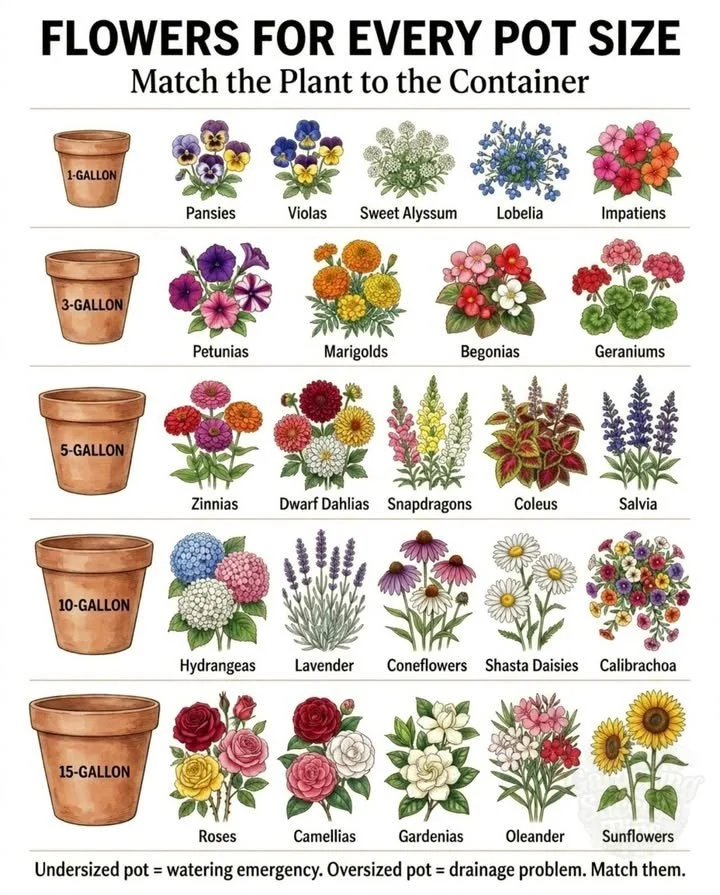
Small pots are excellent for plants like pansies, violas, sweet alyssum, lobelia, and impatiens. These compact flowers thrive in tight quarters and are perfect for window boxes or shallow troughs. If you’re considering planting some delightful annuals, understanding how to address watering issues can help ensure they flourish.
Medium pots are your go-to for petunias, marigolds, begonias, and geraniums. This size provides enough soil to retain moisture, making them suitable for hot afternoons without becoming waterlogged at night. You may also find Grandmas Famous Sweet Potato Butter Cake useful.
Larger pots are best for zinnias, dwarf dahlias, snapdragons, and coleus, which require the additional root room provided by a larger container. It has been noted that a zinnia in a small pot produces half the stems compared to the same variety in a larger pot.
The Benefits of Deep and Statement Containers
For those considering planting perennials, deep planters are essential for hydrangeas, lavender, coneflowers, and shasta daisies. These plants need space to establish their roots and support their growth as well as withstand temperature shifts. On the other hand, statement containers such as those for roses, camellias, gardenias, and sunflowers act as permanent homes for woody plants that need ample soil and moisture to sustain them year after year.
An effective test to determine whether a plant has outgrown its pot is simple: if the pot dries out completely between morning and evening watering, you should consider moving it up one size to prevent the roots from becoming root-bound.
Key Takeaways
In container gardening, the pot that you choose directly influences plant health. Proper attention to size and depth will help ensure that your plants receive the space they need to thrive. It’s an exciting journey of exploration to discover how your plants interact with their containers. For those looking to expand their culinary experience while learning about plant care, consider experimenting with flavors inspired by fresh ingredients that can be grown in containers, such as those in Chinese dishes.
Conclusion
Choosing the right pot for your plants can make a significant difference in their growth and health. For more expert gardening tips, you can consult resources like Ask a Master Gardener. If you are looking for a creative and rich experience in both gardening and literature, The Complete Poetry of James Hearst is a wonderful addition to your reading list, available at Cedar Falls.