Understanding Clematis Pruning for Vibrant Blooms
Clematis is a beautiful climbing plant known for its stunning blooms, but many gardeners face challenges with it not flourishing as expected. Interestingly, most clematis failures aren’t due to soil, sun, or water issues; they stem from improper pruning. The wrong cut at the wrong time can remove the flower buds that the plant has spent a year developing. To avoid these mistakes, it’s essential to understand the three groups of clematis and how to care for them effectively. You may also find Gardens Summer Heat Plants Adapted Sun Dryness Poor Soil useful.
Identifying your clematis group can significantly influence your pruning success. You can learn about the importance of diversity in your garden by exploring how native plants support caterpillar diversity and songbirds, which can create a more vibrant ecosystem for your clematis.
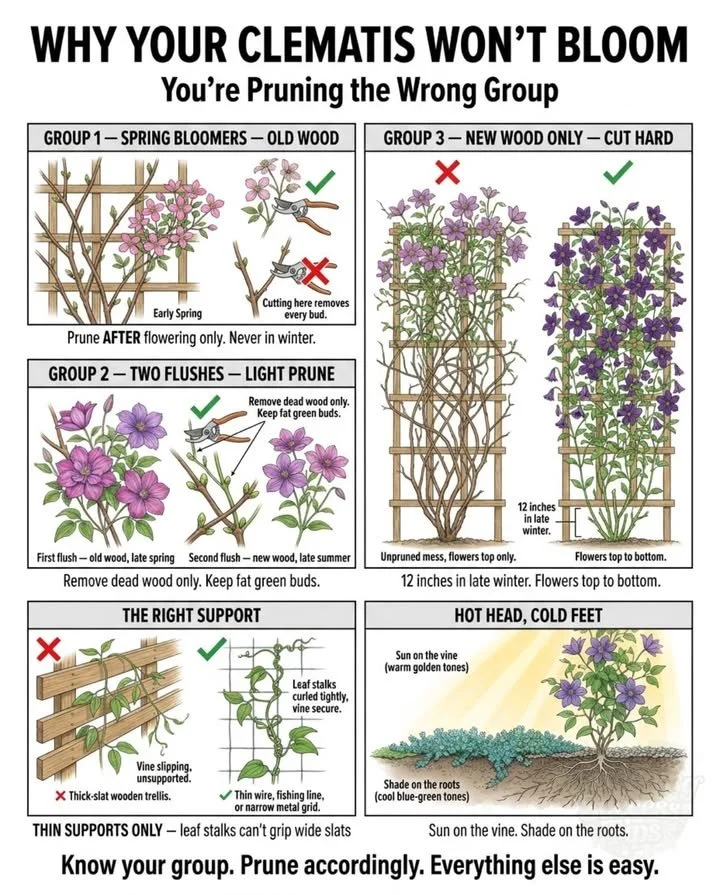
Group 1: Old Wood Bloomers
The first group of clematis includes varieties that bloom exclusively on old wood, such as Montana, Alpina, and Armandii. These spring bloomers require pruning right after flowering. If you happen to cut them in late winter, you’ll remove the buds necessary for blooms, resulting in empty vines for the season. You may also find Grandmothers Planting Calendar Lilac Bloom Soil Temperature useful.
Group 2: Mixed Wood Bloomers
In Group 2, you’ll find large-flowered hybrids like Nelly Moser and The President, which bloom first on old wood, followed by new wood. For these clematis, a light prune in late winter is crucial. This involves removing only the dead wood and trimming to the first pair of fat green buds. Hard pruning on these plants will eliminate their initial flush of blooms. It’s essential to know the appropriate pruning techniques to maintain a healthy plant. For gardeners interested in optimizing their growth techniques, understanding the roles of various plants can be beneficial, such as in flowers in vegetable gardens and their important roles.
Group 3: New Wood Bloomers
The third group consists of clematis that bloom solely on new wood, including popular varieties like Jackmanii and Viticella. These plants need a hard cut back to twelve inches above ground level each late winter. Without this necessary pruning, flowers will appear only at the top of a tangled mess, making them hard to appreciate. You’ll often find that the "only blooms at the top" problem relates back to a Group 3 clematis that hasn’t been correctly pruned back. You may also find Grow Sweet Potato Plants From Grocery Store Potato useful.
For optimal flowering, cut your clematis down to twelve inches to promote blooming at every level. The clear difference in performance among these groups emphasizes the importance of knowing your plant’s category and pruning it accordingly.
Conclusion
To achieve a stunning display of flowers, proper pruning of clematis is paramount. For further guidance on the best practices for growing clematis, refer to this RHS Growing Guide on clematis. Additionally, exploring insightful articles can enhance your gardening knowledge, such as the Janet’s Journal section of Michigan Gardener.