Keystone Plants: Supporting Biodiversity in Your Garden
Not all native plants carry the same weight when it comes to supporting ecosystems. A select few species, known as keystone plants, play a critical role in sustaining the caterpillar diversity in any given area, and since caterpillars serve as a primary food source for nesting songbirds, their presence is vital for a healthy wildlife habitat. By incorporating these keystone plants into your garden, you can noticeably enhance the bird and butterfly activity you observe. You may also find Coffin Sandwiches useful.
For more insight into how different environmental factors impact biodiversity, consider exploring how various compost types can benefit your garden’s ecosystem.
The Importance of Keystone Plants
Keystone plants are essential to maintaining the food web in your garden. Removing these key species can drastically thin the biodiversity of your backyard. To support a vibrant and diverse wildlife community, focus on planting a few critical keystone species. You may also find Tandoori Chicken Incredible For useful.
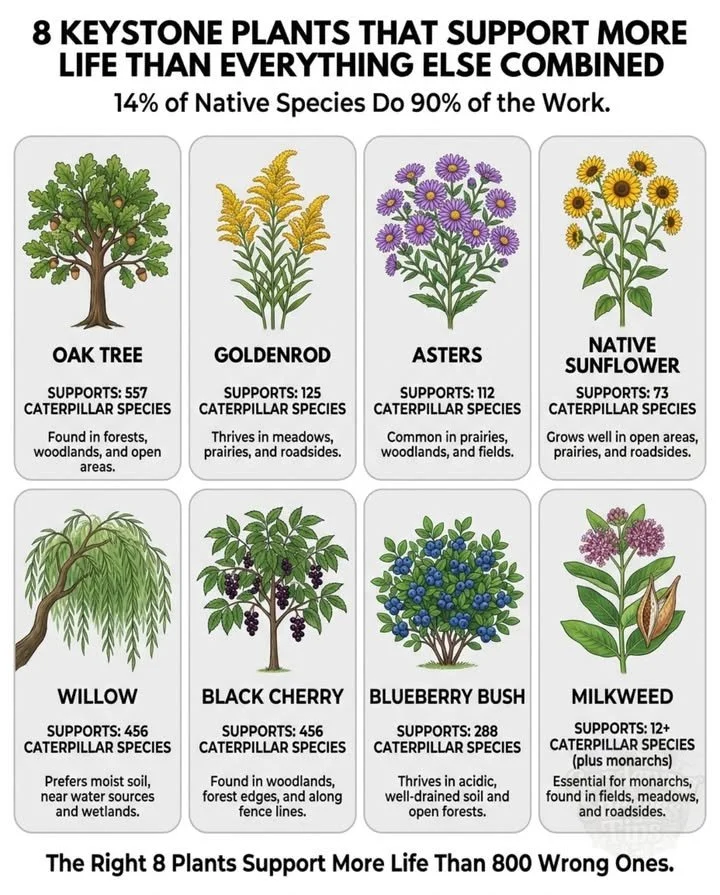
Here are eight of the most effective keystone plants for U.S. gardens: You may also find Biscoff Banana Pudding useful.
Oaks: These trees support more caterpillar species than any other genus in most of North America. Even a young oak begins contributing to local biodiversity within its first few years.
Goldenrod: Known as one of the highest-ranked herbaceous keystone plants, goldenrod blooms from late summer through fall, providing essential nectar when other sources dwindle. It supports dozens of caterpillar species as well as various specialist bees.
Asters: These flowers bloom between September and November, bridging the fall nectar gap and providing substantial support for caterpillars and pollinators alike.
Native Sunflowers: Perennial species of sunflowers return year after year without requiring replanting. They are strong hosts for caterpillars and attract specialist pollinators.
Willows: These fast-growing, adaptable plants range from shrubs to full-sized trees and are among the highest caterpillar hosts on the continent.
Black Cherry: Often found at woodland edges, the black cherry tree is extremely productive in terms of caterpillar support.
Blueberries: This plant offers both edible fruit and serves as a significant ecological contributor, supporting caterpillars across various zones.
Milkweed: As the primary host plant for monarch caterpillars, milkweed is crucial; without it, monarchs cannot complete their lifecycle nearby.
Building a garden that fosters life isn’t about having the most species but rather having the right species that support the ecosystem. By incorporating these keystone plants, your garden will flourish with wildlife.
Enhancing Your Pollinator Garden
Adding keystone plants not only supports caterpillar populations but also attracts various pollinators to your space. This can lead to a more productive garden, increasing fruit and vegetable yields. Consider the benefits of including plants that thrive in specific climates and cater to the local ecosystem. For example, if you’re planning a meal involving rich flavors, you might find inspiration in recipes like classic beef stroganoff that utilize fresh, homegrown ingredients.
Creating a landscape that promotes biodiversity does take planning and research. However, efforts like these not only create a beautiful space for humans but also build a thriving habitat for wildlife. Remember that even a small addition of these plants can significantly change your environment.
Conclusion
Incorporating keystone plants into your garden is an effective way to enhance local biodiversity and support wildlife. For further resources on native plants and gardening techniques, you may find useful information at Choose Natives and consult the West Virginia Wild Yards Manual for effective landscaping ideas. By planting these vital species, you contribute to a healthier ecosystem in your backyard.