
Understanding Seedling Success: Quick Checks to Save Your Plants
Before you give up on a wilting seedling or throw away an old seed packet, it’s crucial to check for three things that take less than a minute. Most seedling failures aren’t about bad seeds; they stem from problems during the first two weeks, and the signs are easy to read once you know where to look. For instance, if you’re looking to make the most of your garden, it’s helpful to understand how issues like light and temperature can affect your plants. You may also find Beef Stroganoff Classic Creamy Dinner For Four useful.
The Float Test: Evaluating Old Seeds
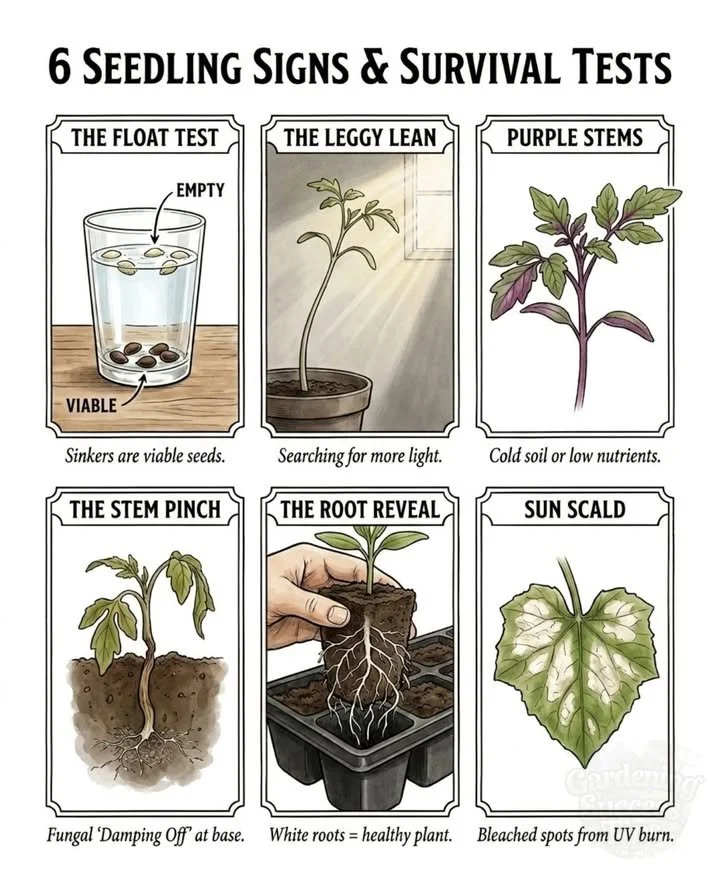
Start with the float test to assess the viability of old seeds. Drop seeds into a glass of water and wait about fifteen minutes. Seeds that sink are dense and likely still viable, while those that float are often hollow or dried out. Although this method is not foolproof—some good seeds may float—it’s a fast way to sort a questionable packet before you waste a week waiting for nothing to germinate. For more inspiration on how to create a vibrant garden, check out this comforting Moroccan chicken recipe, which might motivate your gardening efforts.
The Stem Check: Inspecting Young Seedlings
Next, perform the stem check for young seedlings. Look at the soil line; if the stem appears thin, shriveled, or pinched at the base while the top is still green, the seedling has damping off—a fungal problem that arises from cold, wet, poorly ventilated conditions. Unfortunately, once the stem pinches at the base, that seedling won’t recover. Make sure to provide warmer soil, better airflow, and a fresh sterile starting mix for the next round. If you’re interested in similar gardening topics, exploring irresistible Thanksgiving stuffing can enhance your culinary skills alongside your gardening knowledge.
The Root Check: Preparing for Transplants
Gently slide a seedling out of its cell to check the roots. Healthy roots should be bright white with fuzzy tips, indicating active growth. In contrast, brown and slimy roots suggest overwatering and suffocation. If you notice roots circling the bottom in a tight spiral, it means the seedling has been in the cell too long and needs a larger container before the circling becomes permanent. Tending to the roots will ensure a stronger plant for your garden. You may also find Butterfinger Balls For Everyone useful.
Additional Signals to Watch
Beyond these checks, there are three more signals you can read without pulling anything out. You may also find Cheesecake Factory Italian Lemon Cream Cake 2 useful.
Leggy stems that lean toward a window indicate insufficient light. Adjust their position closer to the light source or add a grow light.
Purple-tinted stems or leaf undersides suggest the soil is too cold for proper nutrient absorption. Aim to warm the soil instead of the air.
Bleached patches on leaves after moving outside could be a sign of sunburn from transitioning too quickly. Gradually harden off your seedlings over a week, increasing outdoor exposure time each day.
Remember, every struggling seedling is communicating what went wrong. The answer is typically rooted in light, temperature, water, or timing—not the seeds themselves.
Conclusion
In summary, addressing common seedling issues can save your plants and enhance your gardening experience. Whether you’re troubleshooting seedlings or planning new meals, resources such as this insightful seedling guide offer valuable insights. Additionally, engaging with community discussions on strategies, like timing for sunlight exposure, can deepen your understanding of plant care and maintenance.