Understanding Herb Growth Cycles: The Importance of Timing
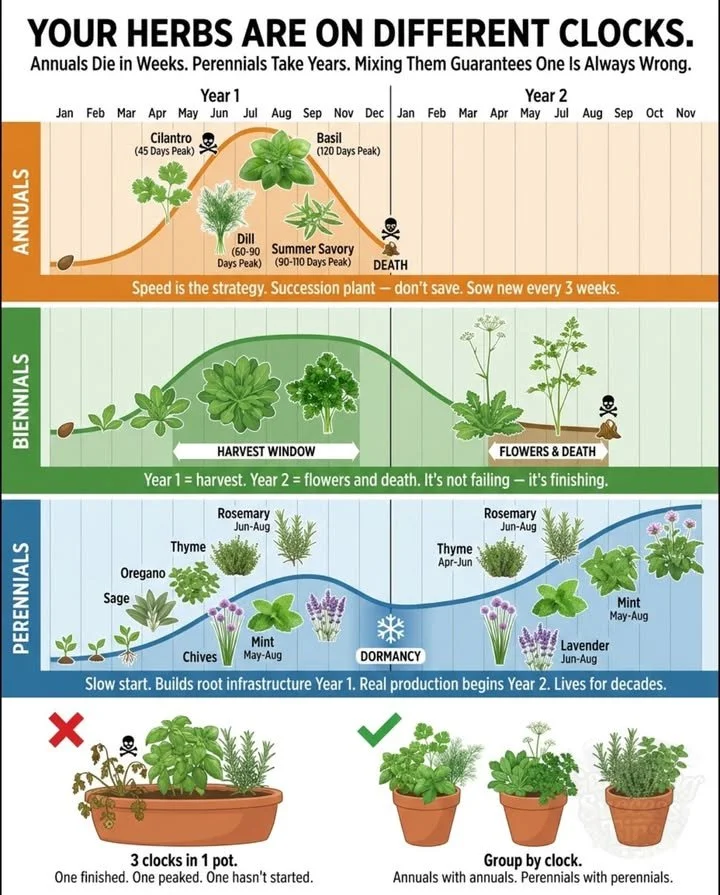
When planting herbs, it’s crucial to understand their different growth cycles. For example, if you plant basil, rosemary, and cilantro together in the same pot in April, by June, you might find that the cilantro has died, while the basil thrives and the rosemary remains unchanged. This phenomenon isn’t a failure of the cilantro; rather, it reflects its biological clock. The key takeaway here is that grouping plants by their growth cycles, rather than by culinary uses, can lead to better gardening outcomes. If you’re interested in creating delicious meals with fresh herbs, you might explore comforting Italian recipes that make use of these flavorful plants.
Annuals vs. Perennials: Grouping by Growth Cycles
Herbs can generally be classified as either annuals or perennials. Annuals, like basil and cilantro, complete their life cycle in one growing season (approximately 45 to 120 days). In contrast, perennials such as rosemary and thyme live longer and can take a year or more to establish their roots. For optimal growth, it’s advisable to plant annuals together and perennials in a separate area. For example, if you’re growing basil, cilantro, and dill, ensure they are grouped together, allowing for fast growth and easy replacement as one plant bolts. You might also enjoy recipes featuring roasted potatoes, such as Greek potatoes with lemon and garlic.
The Case of Parsley
Another herb to consider is parsley, which requires distinct care. It typically takes two years to complete its life cycle: the first year yields leafy harvests, while the second is devoted to flowers and seeds. It’s essential to understand that when parsley bolts in May of its second year, it’s not because it’s stressed; it’s simply finished its growth cycle. You may also find Baked Eggs With Spinach useful.
By understanding the life cycles of these plants, gardeners can significantly enhance their productivity. Mixing different timelines—as seen with basil, cilantro, and rosemary—will likely lead to one plant thriving while another dies prematurely, as they aren’t on the same schedule. This concept is crucial for any gardener looking to maximize their harvest and ensure each plant is at its best when ready for culinary use. You may also find Banana Pudding Rolls With useful.
Tips for Successful Herb Gardening
To avoid the pitfalls of mixing herbs with different growth cycles, consider these tips:
Space wisely: Group herbs by their growth habits. Plant fast-growing annuals in one area of your garden or container, and place slow-growing perennials in another.
Plan for replacements: When growing annuals, plant new seedlings in separate pots a few weeks ahead so they’re ready to swap in when needed.
Learn to recognize when herbs have completed their cycles: This will help you decide when to replace or replant.
By following these strategies, you’ll not only improve your herb garden but can also explore delightful dishes such as sirloin steak sandwiches that highlight your homegrown herbs.
Conclusion
Gardening is not just about the plants you choose but also about understanding their unique growth rhythms. If you’re interested in how much you can save by cultivating your garden, you might want to read The GRS garden project. Furthermore, if you’re keen to know more about the insects that can affect your garden, check out the insects section on The Farm In My Yard. This knowledge will empower you to cultivate a thriving garden that aligns with nature’s schedule.