
The Essential Guide to Using Raised Beds for a Productive Garden
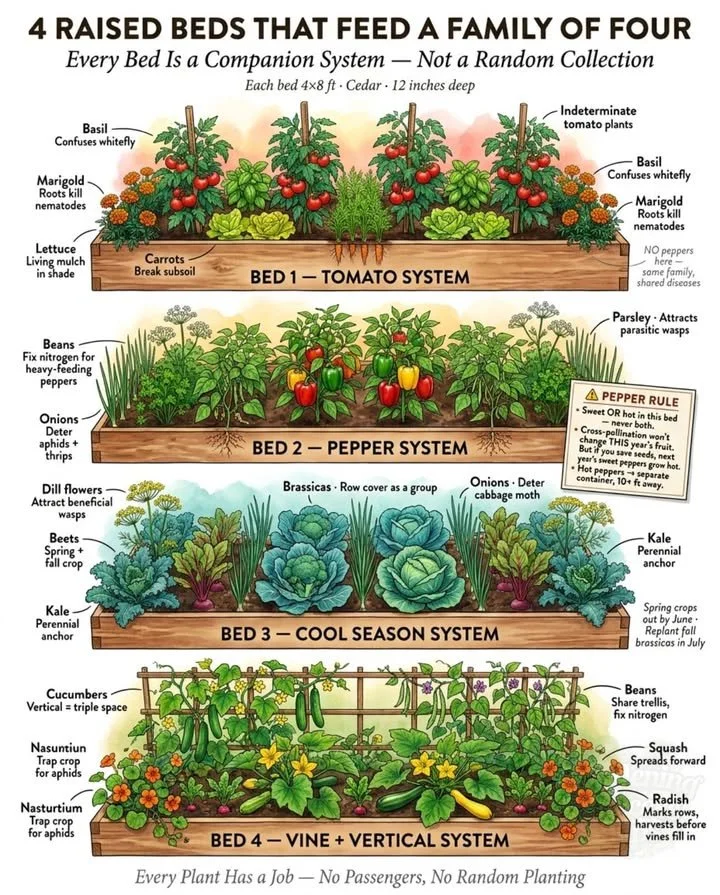
Raised beds offer a fantastic way to maximize your gardening space, particularly if you have limited room or poor soil conditions. With an area totaling 128 square feet, you can strategically plan different plant systems to ensure every square inch is utilized effectively. Each plant plays a crucial role in this system, whether it is nitro-fixing, pest-deterring, soil-breaking, or pollinator-attracting. Understanding how to group your plants can lead to a thriving garden. You may also find Butterfinger Balls For Everyone useful.
Bed 1: The Tomato System
The first raised bed focuses on a tomato-centric system. By planting four staked tomatoes in the center, you create a robust structure supported by healthy companions, such as basil planted within twelve inches of each stem. French marigolds positioned at every corner act as natural pest deterrents. Underneath, lettuce serves as a living mulch, which not only conserves moisture but suppresses weeds. Notably, it’s crucial to avoid planting peppers in this bed since they belong to the same family as tomatoes and share diseases. You may also find Cozy Tomato Tortellini Soup useful.
For more garden strategies, consider checking out some important jobs related to flowers in your vegetable garden that can aid in enhancing plant health.
Bed 2: The Pepper System
The second raised bed is dedicated to peppers. In the center, sweet peppers are planted with bush beans on either side. This configuration benefits from the beans’ nitrogen-fixing abilities, providing essential nutrients for the heavy-feeding peppers throughout the season. To complement this setup, onions are lined along both edges. Importantly, stick to either sweet or hot peppers in this bed to prevent issues with cross-pollination, which could affect future crops.
If you’re looking to maximize the flavor of your garden produce, consider including some delicious recipes like beef stroganoff that utilize fresh vegetables right from your garden.
Bed 3: The Cool Season System
Transitioning to the third bed, you will focus on cool-season crops. Broccoli and cabbage are planted together so that one row cover can protect both from pests. Beets are stationed along one edge, with kale positioned at the corners. Dill is planted at both ends, and letting it flower will attract beneficial wasps to your garden. This allows for a smooth transition in June when spring crops can be replaced with fall brassicas in July.
As you think about seasonal shifts in your garden, explore additional ideas on growing plants by visiting how long stems help tomatoes grow tall and healthy.
Bed 4: The Vine and Vertical System
Lastly, the fourth bed emphasizes vertical gardening. By installing a trellis along the back, cucumbers and pole beans can climb, effectively tripling your surface area for planting. Summer squash sprawls forward while nasturtium trails along the front edge, strategically used as a trap crop to divert aphids away from your main vegetables. This approach not only maximizes space but also promotes healthy plant interactions.
Lastly, if you have strawberries in your plans, consider giving them their own dedicated bed or container, as they can quickly invade shared beds.
Conclusion
Integrating diverse planting systems in raised beds can significantly enhance your gardening success. With thoughtful arrangements, you can cultivate healthy plants that contribute valuable benefits to each other. For additional resources on raised garden beds, check out this insightful tweet on the benefits of raised beds and get practical advice on what to do with the ground under your raised beds. Happy gardening!