Quick answer: if you want a bare fence, trellis, arbor, or pergola to look alive by midsummer, plant fast-growing climbers in May while the soil is warming and the growing season is opening up. Hyacinth bean vine, scarlet runner bean, trumpet vine, passion flower, Group 3 clematis, and star jasmine can all bring vertical color, shade, fragrance, pollinator interest, or edible harvests when matched to the right climate and support.
The secret is choosing the right vine for the job. Some climbers are annuals that race upward in one season. Some are perennial vines that need a year or two to settle before they explode with growth. Some are polite enough for a trellis, while others need strong boundaries because they can become aggressive. This guide gives you a practical May planting plan for instant vertical beauty without turning your garden into a tangled mess.
Why May Is the Sweet Spot for Fast-Growing Climbers
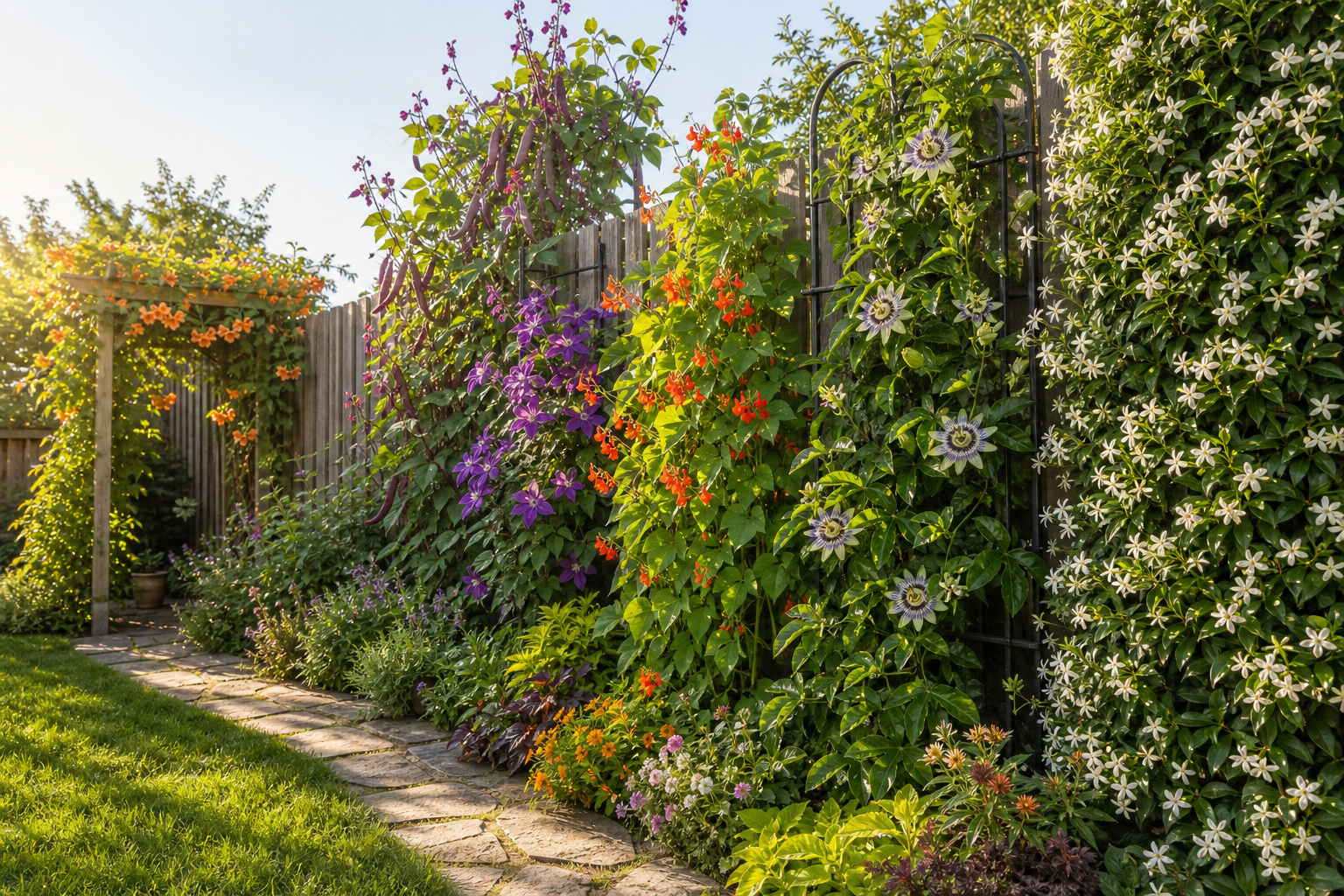
May is a practical planting month because many gardens have passed the worst of frost, the soil is warmer, and young vines can start growing quickly. That timing matters. Climbers need active roots, steady moisture, and something to grab before hot summer weather arrives. Planting too early can stall warm-season vines. Planting too late can leave you with healthy plants that simply do not have enough time to cover a structure before midsummer.
The goal is not only speed. A good climber should solve a real garden problem. You may want privacy along a fence, shade over a sitting area, flowers for pollinators, fragrance near a patio, or edible pods and beans. Matching the vine to the structure is the difference between a garden that feels designed and a garden that feels invaded.
Annual vines such as hyacinth bean and scarlet runner bean are often the fastest visual fix because they put on a lot of growth in one season. Perennial vines such as clematis, passion flower, star jasmine, and trumpet vine can be long-term investments, but they need honest expectations. A large nursery plant may give you a strong first season. A tiny starter plant may need time before it delivers full coverage.
The 6 Best Climbers for Quick Cover and Vertical Beauty
1. Hyacinth Bean Vine
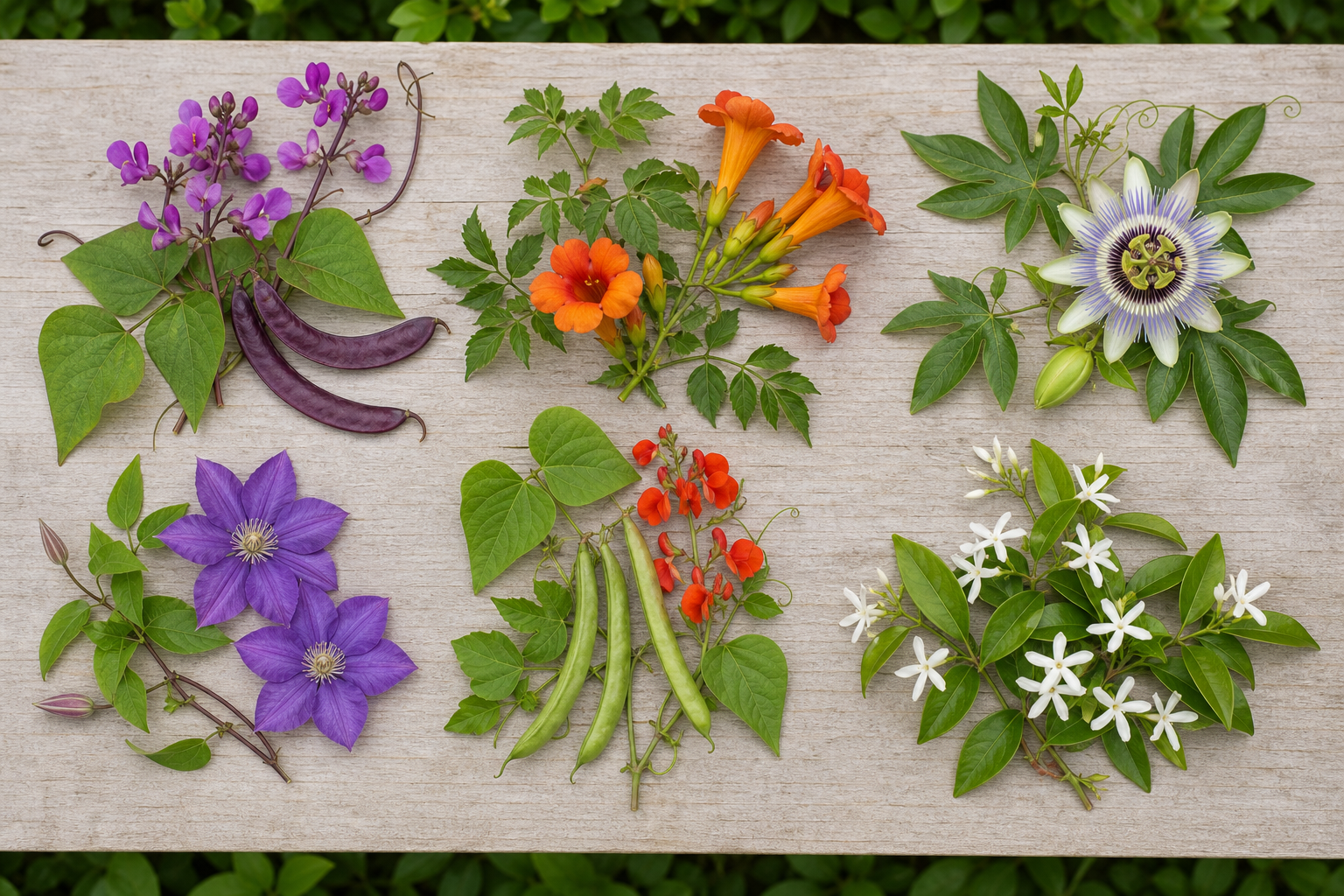
Hyacinth bean vine, Lablab purpureus, is one of the best choices when you want fast summer drama. It is usually grown as an annual in temperate gardens and can climb quickly from seed once the soil is warm. Its purple-tinged stems, violet flowers, and glossy purple pods make it more ornamental than an ordinary bean vine.
Use hyacinth bean vine on a fence panel, obelisk, cattle panel, or sturdy trellis. Give it full sun, warm soil, and regular water while it establishes. Direct sow after frost or start seeds indoors and transplant carefully after the weather settles. It is especially useful when you need seasonal privacy but do not want a permanent woody vine.
Important: hyacinth bean is often grown as an ornamental. Mature beans require proper cooking and are not a casual raw snack. If your goal is edible gardening, use reliable food-preparation guidance and keep ornamental plantings away from children who may be tempted by the pods.
2. Scarlet Runner Bean
Scarlet runner bean, Phaseolus coccineus, is a practical climber because it is beautiful and useful. The red flowers attract pollinators, the vines climb quickly, and the young pods can be harvested like green beans when they are tender. It is a strong choice for gardeners who want a living screen that also belongs in the kitchen.
Plant scarlet runner bean in May after frost danger has passed. It prefers sun, rich soil, and steady moisture. Unlike some heat-loving beans, it often appreciates moderate temperatures, so it can be especially good in regions with cooler summers. Give it a strong trellis because a productive vine can become heavy by midsummer.
Harvest young pods frequently if you want tenderness and continued production. Mature beans can be cooked as dry beans, but like other beans, they should be properly cooked before eating.
3. Trumpet Vine
Trumpet vine, Campsis radicans, is famous for its orange to red trumpet-shaped flowers and its ability to draw hummingbirds. It is also famous for being vigorous. This is not the vine to casually tuck next to delicate trim, a small trellis, or a place where you cannot manage suckers.
For the right site, trumpet vine can be spectacular. It works best on strong supports such as large arbors, heavy pergolas, posts, or fences where its weight and growth can be controlled. Plant it in full sun for best flowering. Once established, it can handle tough conditions better than many ornamental vines.
The honest warning: trumpet vine can spread by suckers and self-seeding. If your garden is small or highly formal, choose a less aggressive climber. If you have a large structure and want hummingbird flowers with serious summer energy, it may be exactly the plant you need.
4. Passion Flower
Passion flower brings one of the most dramatic blooms in the climbing plant world. The flowers look almost architectural, with layered filaments, unusual centers, and a tropical mood. In many gardens, Passiflora incarnata, often called maypop, is the hardier choice compared with more tropical passion flowers.
Passion flower is useful on trellises, fences, and arbors where you want quick summer growth and pollinator interest. It usually prefers sun, well-drained soil, and room to climb. In warm climates it may spread more than expected, so check local behavior before planting it near fragile beds.
If you want fast cover in a single season, buy a healthy young plant rather than starting late from seed. Train the first shoots early and tie them gently to the support until they begin climbing on their own.
5. Group 3 Clematis
Clematis can look delicate, but many varieties are strong performers once established. Group 3 clematis types are especially friendly for gardeners because they bloom on new wood and are pruned hard in late winter or early spring. That simple pruning routine helps prevent the confusing tangle that can happen with other clematis groups.
Use Group 3 clematis on trellises, obelisks, fences, and mixed shrub borders. Plant the roots in cool, moist, well-drained soil and let the top growth reach sun. Mulch helps keep the root zone comfortable. A larger nursery plant planted in May can give a useful first season, though full coverage often improves in the second and third years.
Choose a variety suited to your climate and support size. Some clematis are compact and refined, while others are large, vigorous, and better for bigger structures.
6. Star Jasmine
Star jasmine, Trachelospermum jasminoides, is loved for glossy evergreen foliage and fragrant white flowers. It is not a true jasmine, but the scent gives it a similar garden role near patios, gates, seating areas, and entryways. In warm climates, it can become a polished, fragrant screen on fences and walls.
Star jasmine is best for mild regions because hardiness depends on winter temperatures. In colder zones, it may need container culture, a sheltered spot, or a different vine altogether. It grows more slowly than annual beans at first, but a healthy plant can create elegant long-term coverage with less chaos than trumpet vine.
Use star jasmine on a trellis, wire support, wall, or fence where you can tie and guide the stems. It is especially valuable where fragrance matters as much as speed.
Fast Choice Table: Which Climber Fits Your Garden?
| Climber | Best Use | Speed | Watch-Out |
|---|---|---|---|
| Hyacinth bean vine | Fast seasonal fence cover | Very fast annual | Ornamental pods are not raw snacks |
| Scarlet runner bean | Edible pods and pollinator flowers | Fast annual/perennial in mild areas | Needs a strong support |
| Trumpet vine | Large arbor or hummingbird garden | Very vigorous once established | Can sucker and spread aggressively |
| Passion flower | Dramatic flowers on trellis or fence | Fast in warm weather | Can spread in favorable climates |
| Group 3 clematis | Colorful flowers with simple pruning | Moderate to fast after establishment | Needs cool roots and good support |
| Star jasmine | Fragrant evergreen screen in mild zones | Moderate, long-term coverage | Not hardy everywhere |
May Planting Plan for Quick Vertical Cover
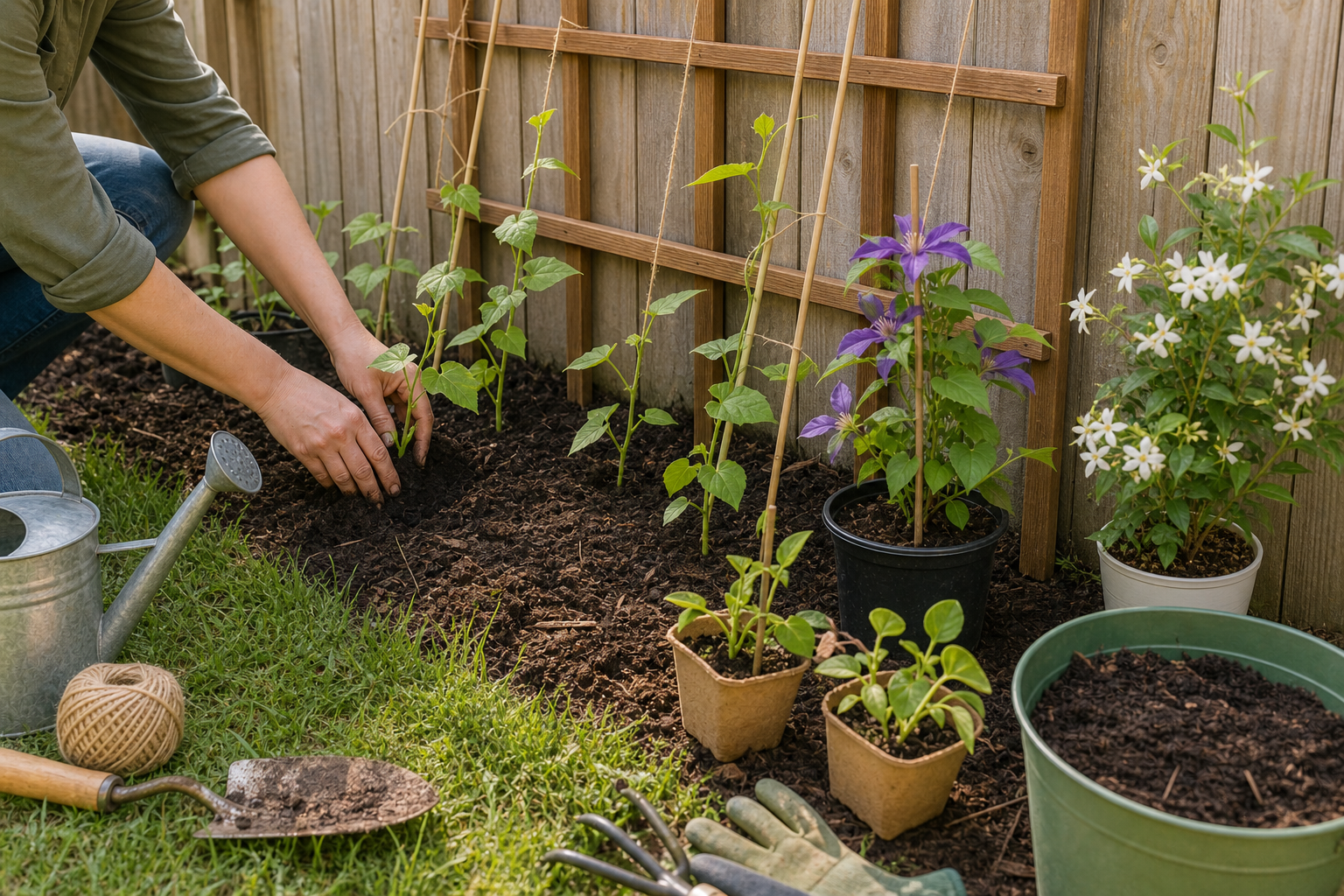
Start with the structure before you start with the plant. A thin decorative trellis is fine for clematis or a small annual vine, but it may not be enough for trumpet vine or a heavy bean screen. Install posts, wire, netting, panels, or an arbor before planting so roots are not disturbed later.
Prepare the soil with compost and water deeply before planting. Most climbers grow better when the root zone is consistent rather than swinging between dry and soaked. Mulch after planting to hold moisture, but keep mulch away from direct contact with the stems. Tie new growth loosely with soft garden twine, and check ties often so they do not cut into expanding stems.
For annual vines, sow or transplant after frost and keep seedlings protected from slugs, rabbits, and drying winds. For perennial vines, plant at the proper depth, water regularly through the first season, and focus on training a strong framework. A well-trained first month can save you hours of untangling later.
Design Ideas for Fences, Trellises, and Pergolas
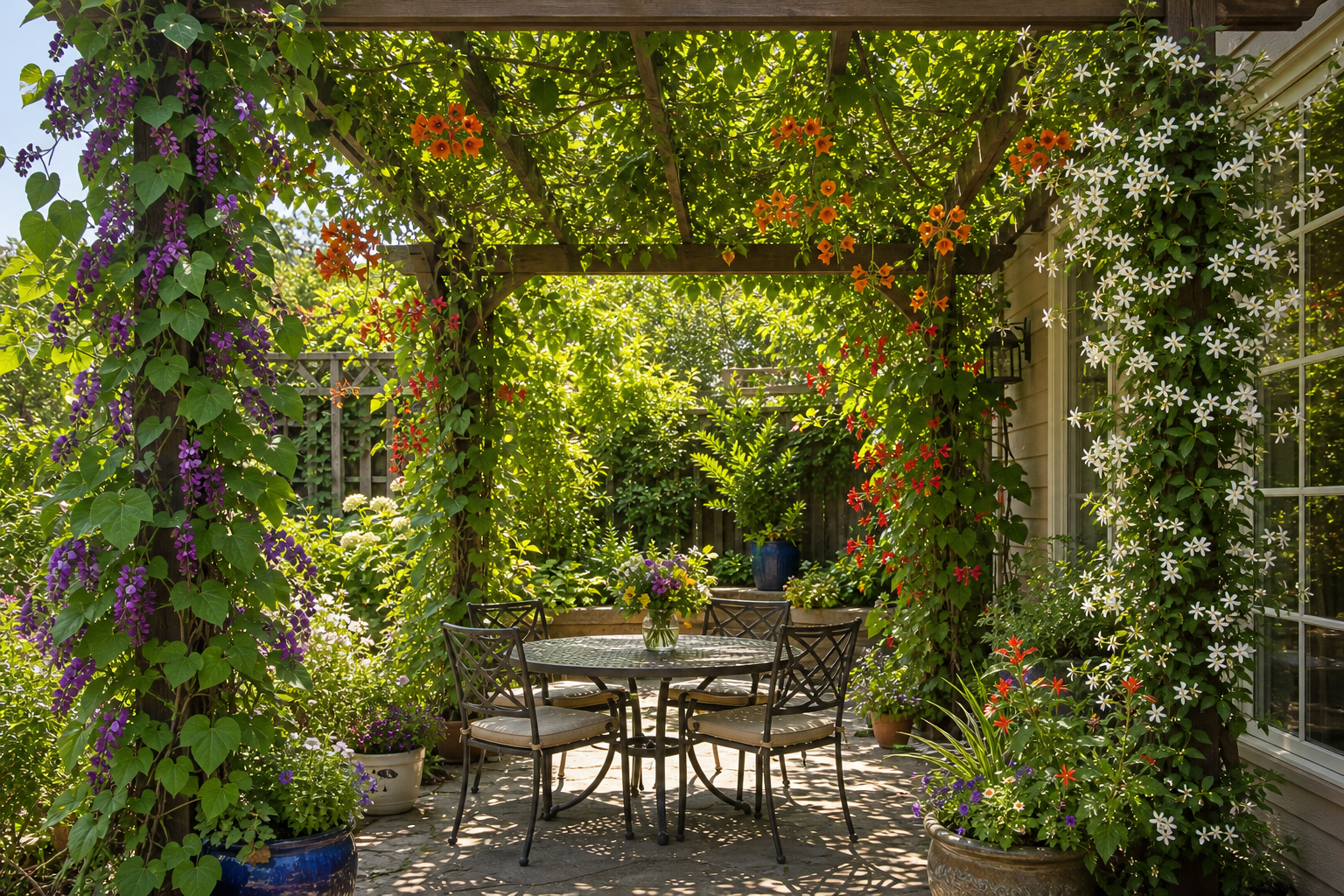
For a bare privacy fence, combine one fast annual vine with one long-term perennial. Hyacinth bean or scarlet runner bean can provide quick summer coverage while clematis or star jasmine settles in. For a pergola, choose vines with enough vigor to reach overhead but not so much aggression that maintenance becomes a fight. For a pollinator corner, combine trumpet vine, passion flower, and runner bean where you have space to manage growth.
Containers can work for annual vines and smaller climbers, but they need large pots, regular water, and sturdy supports. A tiny pot dries out quickly in summer, which slows growth just when you want speed. If you are covering a balcony rail or patio screen, use a generous container and choose a vine that fits your climate.
Common Mistakes to Avoid
- Planting a vigorous woody vine on a weak trellis.
- Expecting a tiny perennial starter plant to cover a fence in one season.
- Ignoring hardiness zones, especially with star jasmine and passion flower.
- Letting vines sprawl on the ground before training them upward.
- Overfeeding with high-nitrogen fertilizer, which can create leaves at the expense of flowers.
- Planting trumpet vine where suckers and seedlings will be hard to manage.
- Forgetting to water annual vines during the first few hot weeks.
Frequently Asked Questions
What is the fastest climber to plant in May?
For quick seasonal cover, hyacinth bean vine and scarlet runner bean are usually among the fastest because they are annual vines that grow rapidly in warm soil. They are ideal when you want visible results by midsummer.
Can clematis cover a fence by midsummer?
A large, healthy Group 3 clematis may give good first-season growth, but full fence coverage is more realistic after establishment. Plant it for long-term performance, not only instant screening.
Is trumpet vine a good choice for a small garden?
Usually not unless you are ready to manage it. Trumpet vine is beautiful and valuable for hummingbirds, but it can be aggressive. It is better for strong supports and larger spaces.
Which climber is best for fragrance?
Star jasmine is the standout for fragrance in mild climates. Plant it near patios, gates, windows, or seating areas where the scent can be enjoyed.
Can I grow these climbers in containers?
Yes, especially annual vines and smaller clematis varieties, but containers must be large and watered consistently. Heavy perennial vines need strong supports and enough root space.
Final Takeaway
Fast-growing climbers are one of the quickest ways to make a garden feel lush, private, and finished. In May, warm soil and a long growing window give vines the push they need to climb fences, trellises, and pergolas before the heart of summer.
Choose annual vines for instant seasonal coverage, perennial vines for long-term structure, and fragrant or pollinator-friendly options for extra value. With the right support, water, and training, a bare fence can become the most beautiful vertical feature in your garden.
Helpful references: NC State Extension on hyacinth bean vine, NC State Extension on trumpet vine, NC State Extension on passion flower, NC State Extension on scarlet runner bean, NC State Extension on star jasmine, and University of Illinois Extension on clematis.