
How to Easily Propagate Hydrangeas from Cuttings
You don’t need to buy another hydrangea; the one in your yard can produce as many new plants as you want for free, simply by taking a stem cutting. This cost-effective gardening technique is not only rewarding but also allows you to expand your garden with beautiful blooms. To get started, it’s good to know that hydrangeas root easily from softwood cuttings taken in early summer. If you’re interested in other quick garden activities, you might enjoy these refreshing ideas.
Taking the Cutting
To successfully take a hydrangea cutting, follow these steps: You may also find Butterfinger Balls For Everyone useful.
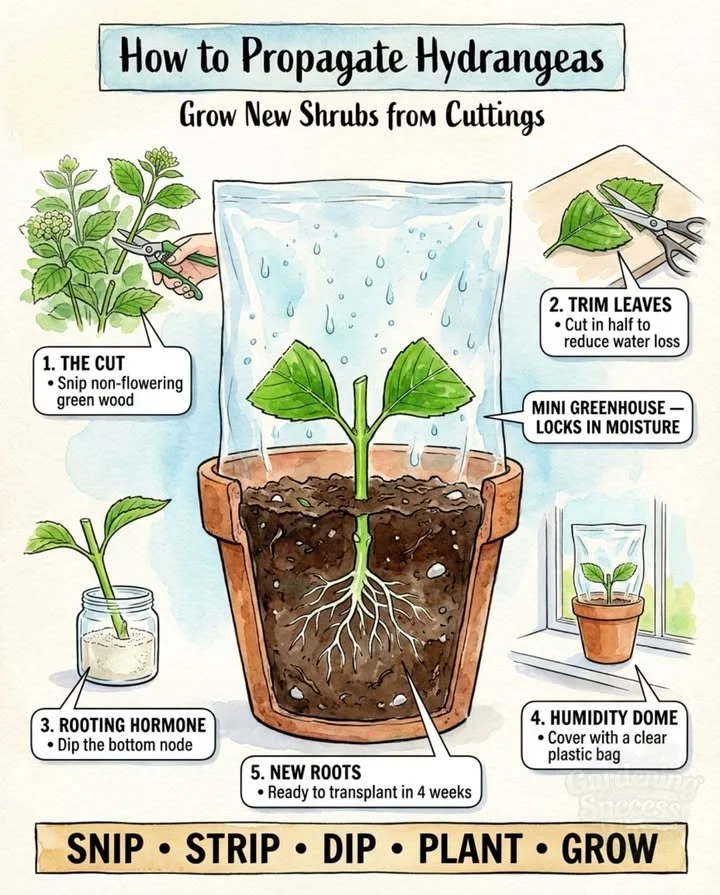
- Choose a Healthy Stem: Look for new green growth, making sure there are no flower buds. The cutting should be from this season and not from older, brown wood.
- Cut the Segment: Aim to cut a segment about the length of your hand just below a leaf node, which is the small bump on the stem where the leaves emerge. This node is crucial as it’s where the roots will begin to grow.
- Prepare the Leaves: Strip the lower leaves completely, leaving only the top pair attached. Cut the remaining two leaves in half horizontally to reduce moisture loss while the cutting has no roots.
- Use Rooting Hormone: Although not strictly necessary, dipping the bare bottom node into rooting hormone powder will speed up the rooting process.
- Plant the Cutting: Place the stem in a pot filled with moist potting mix and cover it with a clear plastic bag or an upside-down jar to maintain humidity. Keeping it in bright shade is essential to prevent overheating.
What to Expect After Planting
After planting your cutting, roots typically form within a few weeks. You can test for root development by gently tugging on the plant; if you feel resistance, you’re in good shape. If there’s no resistance, be patient and wait longer. Once your cutting is rooted, remove the covering gradually over several days to acclimate it to normal air. You may also find Comforting Italian Sausage Potato useful.
As spring arrives, you can plant the new hydrangea in its permanent location. It’s fascinating to know that this new plant will be a genetic clone of the parent, ensuring you get the same flower color and growth habit you love. It’s similar to how different dishes can evoke memories; for instance, the flavors of cheesesteak tortellini can remind you of home-cooked meals.
Tips for Successful Propagation
- Timing is Key: Ensure you take your cuttings in early summer when the stems are still green and flexible.
- Watering is Essential: Keep the soil moist, but avoid overwatering, as this can lead to rot.
- Patience is a Virtue: It may take some time for your cuttings to root fully, so be patient and provide the right conditions.
- Prevent Pests: Monitor your cuttings for any pests that may hinder their growth.
By following these steps, you’ll be able to create new hydrangeas at virtually no cost. Imagine the joy of seeing your garden filled with your own propagated plants! You may also find Comforting Moroccan Chicken One useful.
Conclusion
In summary, propagating hydrangeas from cuttings is a straightforward and rewarding process that can enrich your garden without incurring extra costs. For more detailed guidance, you may want to check out 3 Easy Ways to Propagate Hydrangeas or learn about how to propagate Oak Leaf Hydrangeas. Happy gardening!