Creating a Bloom Ladder: Designing a Hummingbird Garden
Many hummingbird gardens experience a peak bloom month, while other parts of the season remain devoid of flowers. To resolve this issue, gardeners can implement a bloom ladder. This technique involves carefully planning overlapping species to ensure that something red and tubular is in bloom every week from May until the first frost. Hummingbirds are drawn to gardens that consistently provide nectar, so a garden designed with this in mind will attract them on a daily basis. For those looking for ideas to enhance their gardens, a visit to the spring recipe collection can offer some inspiration.
Early Bloomers: May to June
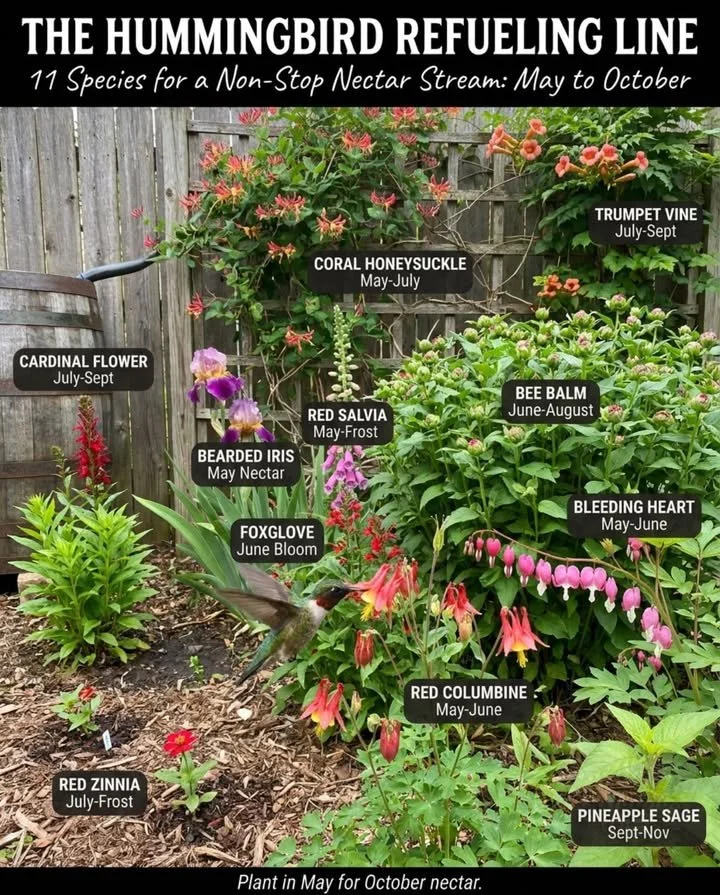
During the early arrival of hummingbirds in May and June, certain plants serve as essential nectar sources. The red columbine (Zones 5–7) is one of the first flowers to bloom, catering to the returning migratory birds. It fills the gap before other flowers begin to open up. Another great option for shaded areas is the bleeding heart (Zones 3–9), whose unique shape is perfect for long-billed hummingbirds. Both flowers bloom during the same window and are crucial for supporting these early arrivals. You may also find Air Fryer Crispy Tofu useful.
Additionally, the coral honeysuckle (Zones 4–9) can be an excellent choice. This self-clinging vine begins to bloom in late May and continues throughout the summer, often providing a second bloom in September. It’s ideal to train it on a fence or trellis nearby for optimal vertical coverage. You may also find Not All Compost Is The Same Five Types Of Compost useful.
Midsummer Anchor: June to August
From June to August, plants like bee balm (Zones 3–9) become increasingly important. Known for their dense patches and vibrant colors, they attract hummingbirds reliably throughout the summer months. Ensure you plant them in a space where they can thrive and spread, as they tend to colonize. The salvia coccinea (Zones 7–10) is another great option that self-seeds and blooms from late spring until frost, providing a consistent nectar source in warmer climates. You may also find Sausage Potato Soup Incredible useful.
For garden enthusiasts looking to expand on their themes, the allure of a creamy risotto recipe can make cooking easier after a day spent tending to the garden.
Deep-Summer Bridge: July to September
The cardinal flower (Zones 3–9), known for its affinity for wet areas, is an excellent option for damp spots in the yard, such as near a rain barrel or pond edges. By planting this flower, gardeners can enjoy a burst of scarlet spikes during the late summer, when many other red flowers have already peaked. The trumpet vine (Zones 4–9) also contributes to this period, blooming heavily through midsummer into September. It’s a vigorous grower that can climb and cover an arbor in just a season, but requires enough space to spread out.
Migration Send-Off: August to October
As summer transitions into fall, the zinnias, which bloom from August until the first hard frost, serve as a late-season workhorse in the hummingbird garden. Red varieties are particularly appealing to these birds and are easy to sow in gaps left by early bloomers. Similarly, pineapple sage (Zones 8–11) flowers from late September into November, providing essential nourishment for migrating hummingbirds preparing for their long journey.
When constructing your bloom ladder, remember that you don’t need every species in a single bed. It’s sufficient to select two species from each blooming period to ensure continuous coverage. Furthermore, plant in clusters rather than scattered individuals, as densely grouped flowers attract hummingbirds more effectively. It’s also advisable to keep feeders up through October, even after blooms have faded, as migrating birds may still pass through looking for food.
Conclusion
By creating a bloom ladder, gardeners can construct a hummingbird paradise that attracts these beautiful creatures throughout their migration seasons. Incorporating various species ensures a consistent food source, allowing garden enthusiasts to enjoy the beauty of hummingbirds. For additional resources on gardening and birdwatching, check out this informative guide about container gardening and explore The Wall of Birds from the Cornell Lab for tips on attracting birds to your yard.