Understanding Tomato Support: Choosing the Right Cage
When it comes to growing tomatoes, proper support is crucial in ensuring that plants thrive and produce fruit effectively. The typical tomato cage you find at the hardware store fits primarily one type of tomato — the true bush variety. These plants, like Roma and Bush Early Girl, stop growing at about chest height and fit comfortably within the confines of a standard cage. For those interested in how different tomato types grow, you can find valuable information in this comprehensive guide to compost types which can enhance plant health.
However, relying solely on this size limitation can lead to problems. As many gardeners have noticed, other tomato varieties easily outgrow these cages by midsummer. This can cause them to fall over and tangle with neighboring plants. To avoid this, it’s essential to choose support that matches the growth habits of your specific tomato variety. You may also find Tomato Suckers Free Plants From Pinched Off Shoots useful.
Different Types of Tomato Plants and Their Support Needs
Bush Tomatoes
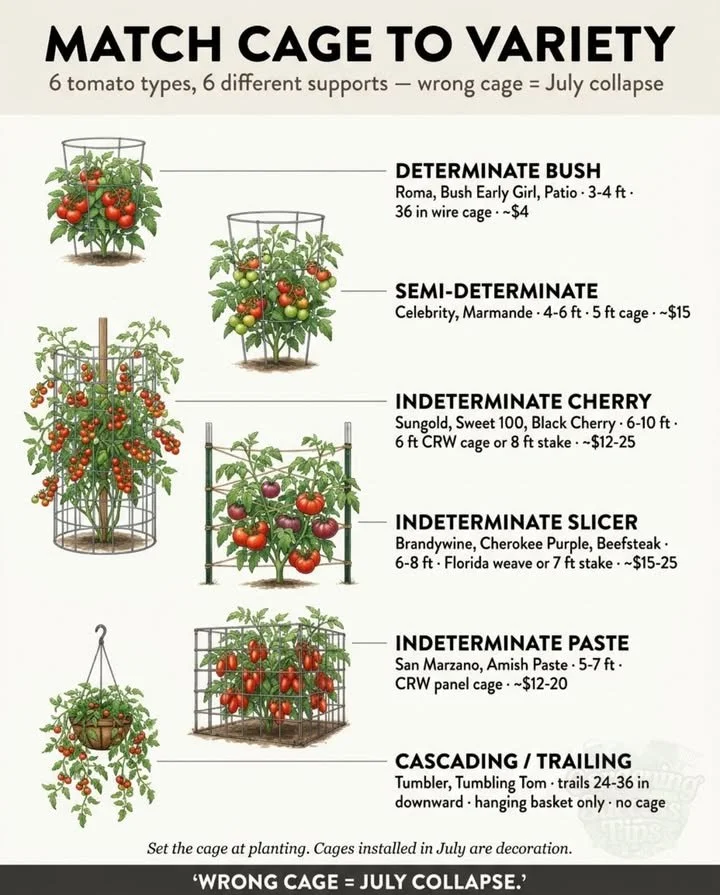
Bush tomatoes, such as Roma, Patio, and Bush Early Girl, typically produce fruit in a single burst and then stop growing. Because of their compact nature, a standard store cage is ideal for these types of tomatoes. However, it’s worth noting that even the shorter varieties can benefit from proper care and nurturing. For anyone looking to create delicious dishes with tomatoes, recipes including bacon-wrapped dates can serve as inspiration for using your homegrown produce.
Semi-Determinate Varieties
Tomato varieties that are semi-determinate, like Celebrity, may appear bush-like on labels but continue growing and producing until frost arrives. These plants can overflow a short cage by July. It’s necessary to provide them with a taller cage to prevent them from folding under their weight. You may also find Banana Chocolate Chip Scones useful.
Vining Tomatoes
Vine-growing tomatoes, including popular varieties like Sungold and Black Cherry, require a significant amount of vertical support. A standard “tall cage” often doesn’t suffice for these indeterminate varieties, as they tend to reach the height limits of traditional cages by mid-summer. Instead, consider constructing a tall DIY cage from heavy-gauge wire, or use stakes with regular ties to support their climbs. You may also find Chewy Chocolate Chip Cookies Thick Soft Easy useful.
Large Slicers and Paste Varieties
For those growing large slicers, such as Brandywine and Beefsteak, sturdy support is also essential due to their height and heavy fruit. Traditional round wire cages often bend under pressure; thus, using a strong stake or a string-weave system between two posts is a recommended practice. Paste tomatoes, like San Marzano, require even more rigid support, ideally with a heavy wire cage or panel cage to withstand the weight of their clusters.
Special Considerations for Trailing Varieties
Finally, if you’re working with trailing varieties such as Tumbler or Tumbling Tom, they thrive in hanging baskets rather than traditional cages or stakes. This unique approach allows them to grow downward, maximizing space efficiency in your garden.
The best rule to keep in mind while gardening is to match the support to the intended growth type of the plant. Installing cages after the plants have grown can lead to frustration, as they tend to flop over and create a mess. By setting up the support at planting time and ensuring it aligns with the tomato’s growth pattern rather than the price tag, you can cultivate a successful garden.
Conclusion
Understanding the various types of support needed for different tomato varieties can drastically affect your gardening success. For more in-depth knowledge on horticultural practices, you may find resources helpful at Basic Horticulture Archives. Furthermore, if you’re seeking inspiration for additional reading materials, the Guardian’s top 10 book lists can offer a plethora of options to broaden your gardening expertise.