The Benefits of Embracing Clay Soil in Your Garden
When it comes to gardening, many people’s instinct is to correct what they perceive as a problem—specifically, the heavy clay soil found in many backyards. The common practice involves hauling in compost, adding sand, or even double-digging every bed, often without considering that native plants have thrived in such conditions for millennia. In fact, clay soil has unique properties that can benefit your garden when you select the right plants. Not only does clay hold more moisture and nutrients than any other soil type, but certain perennials have evolved to take full advantage of these qualities. You may also find Comforting Italian Sausage Potato useful.
To create a thriving garden in clay soil, consider incorporating some resilient perennials that are perfectly adapted to these conditions. You may also find Irresistible Greek Potatoes With Lemon And Garlic useful.
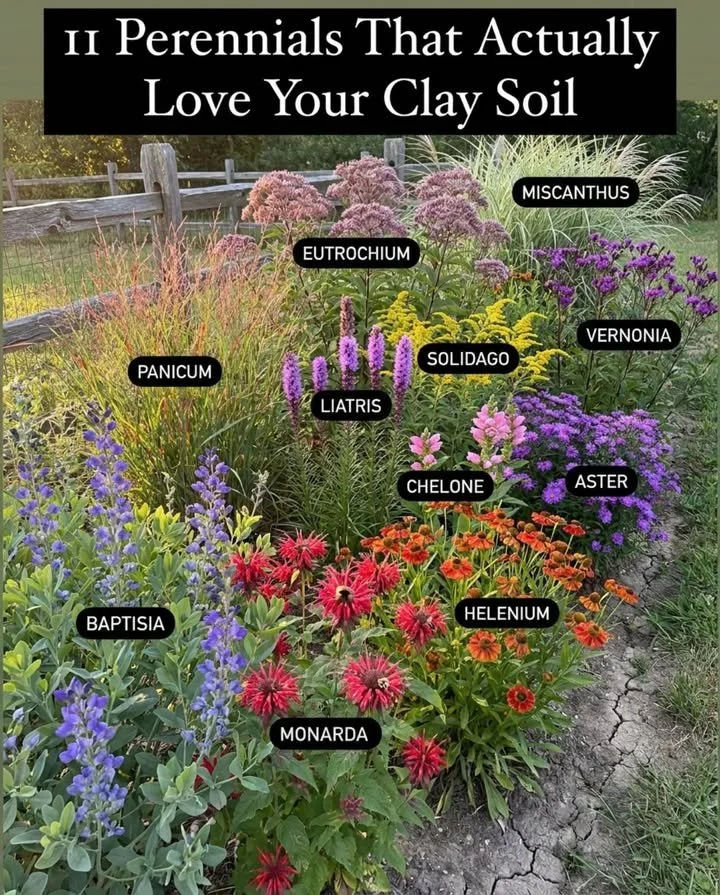
Perennials That Flourish in Clay Soil
Baptisia (Zones 3–9) – With deep taproots that penetrate compacted clay, Baptisia produces stunning blue, yellow, or white flowers in spring. After flowering, these plants develop seed pods that rattle in the winter wind. You may also find Asparagus Risotto Spring Creamy Quick Weeknight Meal useful.
Monarda (Bee Balm) (Zones 3–9) – This perennial offers shaggy flower heads in red, pink, or purple, bringing color to summer gardens. Hummingbirds and bees flock to its blooms, making it a fantastic addition to any pollinator garden. Alternatively, you can explore some comforting recipes featuring these vibrant ingredients.
Panicum virgatum (Switchgrass) (Zones 4–9) – Known for its deep roots reaching six feet, Switchgrass helps break up clay from below, allowing better drainage while adding architectural interest to your garden with its red-tipped fall foliage. You may also find Butterfinger Balls For Everyone useful.
Eutrochium (Joe-Pye Weed) (Zones 4–9) – With its six-foot tall stems topped with dusty pink blooms, Joe-Pye Weed attracts butterflies in late summer and performs exceptionally well in the clay soil from which it is born.
Liatris (Blazing Star) (Zones 3–8) — The unique top-down blooming of purple bottle-brush spikes not only captivates the eye but also provides a necessary food source for migrating monarch butterflies.
Solidago (Goldenrod) (Zones 3–9) — Often mistaken for causing allergies, goldenrod’s heavy pollen ensures it won’t drift. Its golden plumes fill the late summer voids beautifully between summer flowers and autumn cleanup.
Chelone (Turtlehead) (Zones 3–8) — This unique plant thrives in areas with the slowest drainage, making it perfect for those soggy clay corners in your garden.
Helenium (Sneezeweed) (Zones 3–8) — Offering warm-toned daisies from midsummer to fall, Sneezeweed is often wrongly associated with allergies but blooms concurrently with ragweed while keeping its pollen contained.
New England Aster (Zones 4–8) — This perennial bursts with rich purple blooms in the fall, serving as a critical pollinator resource before winter, with clay soil providing stability through freeze-thaw cycles.
Miscanthus (Maiden Grass) (Zones 4–9) — An adaptable grass that grows easily in various soil types, including clay, providing fine-textured foliage with lovely autumn plumes.
Vernonia (Ironweed) (Zones 5–9) — With intense violet flower clusters, Ironweed is designed for heavier soils, making it another excellent choice for a clay garden.
The best approach to gardening in clay soil is to utilize plants that are already well-suited to it. This not only makes the gardening process easier but also enriches the local ecosystem.
Conclusion
Incorporating native plants into your garden can lead to a more sustainable and low-maintenance landscape. For more information on the nuances of soil types and gardening, the Dictionary offers useful insights. Additionally, if you’re looking for resources like books and multimedia to enhance your gardening knowledge, check the titles owned by the Monrovia Public Library. Embracing the strengths of clay soil can turn a gardening challenge into a beautiful flourishing landscape.