The Beauty of Wildflower Meadows: Transforming Your Yard
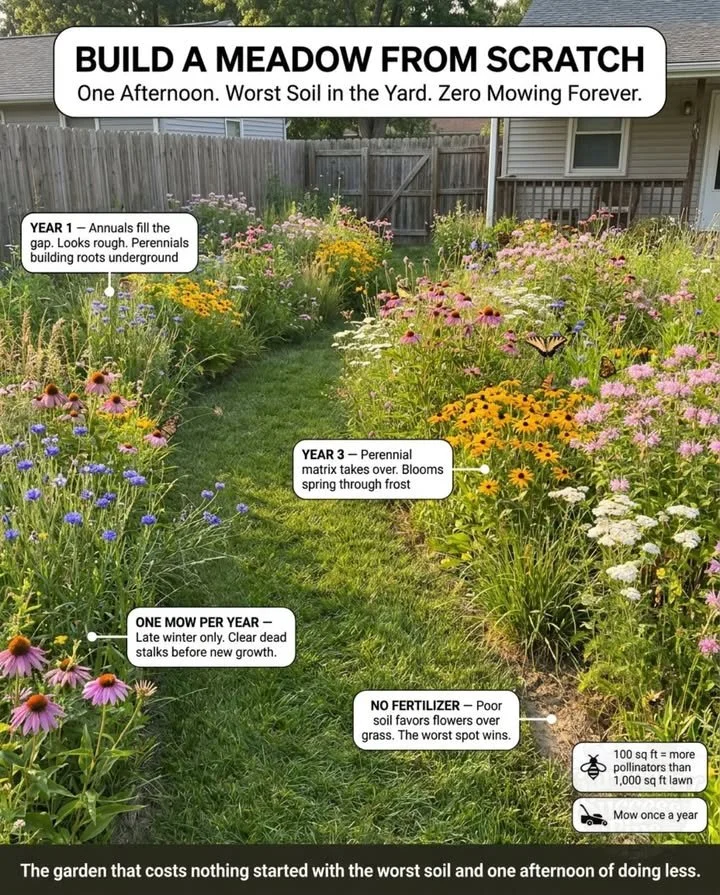
Turning your yard into a beautiful wildflower meadow may seem daunting, but knowing that the worst soil can actually serve as the best meadow site is the first step. Rich, fertile soil tends to favor grasses that can choke out wildflowers. In contrast, lean, poor, and unfertilized ground is where wildflowers thrive. The areas where grass struggles to grow are ideal locations for establishing a vibrant meadow. You may also find Asparagus Risotto Spring Creamy Quick Weeknight Meal useful.
To start your wildflower meadow, you need to follow a few critical steps. First, eliminate the existing grass by either smothering it with cardboard or scalping it to bare soil with a rake. Avoid adding compost or fertilizers, as these can enhance the grass, further complicating your goal. Importantly, don’t till deeply; wildflower seeds need light to germinate. Instead, scatter your chosen seeds directly onto the surface. For optimal growth, it’s crucial to press them into the soil to ensure good contact, then simply walk away. You may also find Banana Pudding Tiramisu Incredible useful.
One fantastic resource for exploring wildflowers is the article about edible weeds that may be growing in your yard. While they can be seen as nuisances, many of these weeds can provide valuable insights into your landscape as you prepare for wildflower planting.
As you begin to plant, it’s advantageous to select a perennial-heavy native seed mix tailored to your local climate zone. Avoid the cheaper hardware store options, as these typically offer flowers that bloom once and then disappear. Instead, consider high-quality, native mixes that will return year after year.
During the initial year, you might find that your meadow looks somewhat rough and unkempt. This is completely normal as perennials prioritize establishing their roots over producing blooms. By the third year, however, you can expect a rotation of colorful blooms that last from spring through hard frost with negligible upkeep.
Once established, your wildflower meadow will require minimal maintenance—just one mow in late winter to keep everything tidy. This approach aligns perfectly with the ethos of a low-maintenance garden that emphasizes natural growth and habitat sustainability.
If you’re looking for tips on other compatible plants or interesting recipes to try using your homegrown blooms, check out these refreshing smoothie ideas using ingredients you may also find enriching growing beside your wildflowers.
As you embark on creating your wildflower meadow, remember that patience is key. The results will transform your space into a lively habitat that supports local wildlife and provides a beautiful landscape.
Conclusion
In conclusion, wildflower meadows not only enrich your garden but also contribute to the ecosystem by attracting pollinators and other beneficial insects. For a deeper understanding of the ecological importance of wildflowers, consider reading an intriguing piece on The Dandelion King. Moreover, for precise definitions and vocabulary related to gardening, the dictionary might be a helpful resource. Embrace the beauty of your wildflower meadow, and enjoy the journey it brings!