The Best Plants to Attract Pollinators This May
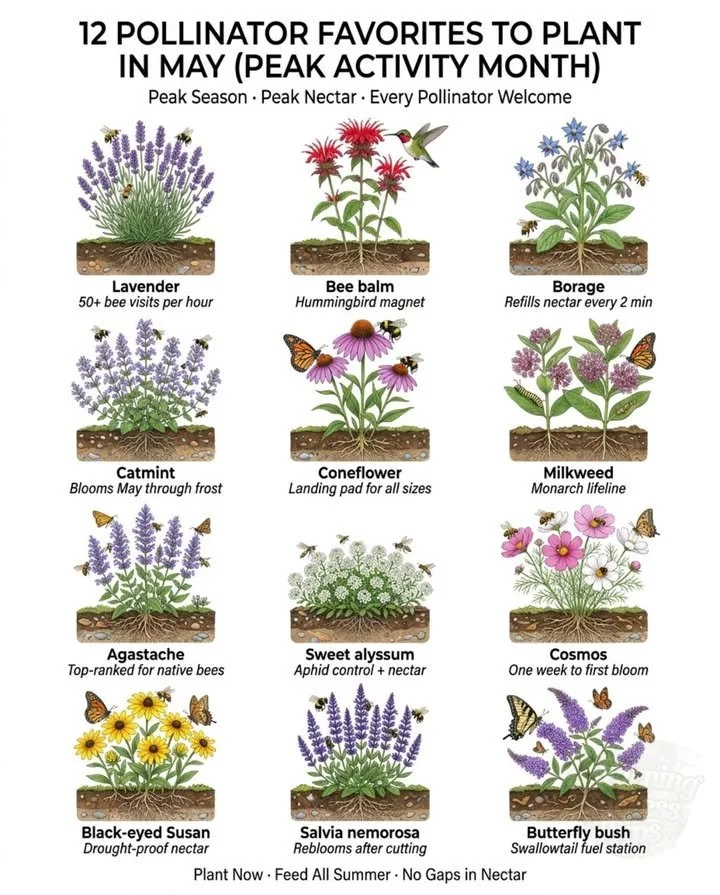
May is an optimal time to focus on planting flowers that attract pollinators, as their activity peaks during these warmer months. The right plants not only beautify your garden but also provide essential nourishment for bees, butterflies, and other beneficial insects. Here are twelve plants that establish quickly in warm soil and start producing nectar within weeks. You may also find Grow Tropical Houseplants From Fruit Pits In Water useful.
1. Lavender
Transplant potted lavender starts into full sun and sharp-draining soil. Once established, they experience heavy bee traffic, making them a vital addition to any pollinator garden. Additionally, if you’re interested in maintaining a thriving garden, consider learning how to deter garden pests with strong-scented plants.
2. Bee Balm
Plant divisions or starts of bee balm in the morning sun. The tubular flowers are particularly appealing to hummingbirds and long-tongued bumblebees, ensuring diverse pollinator activity in your garden. You may also find Low Maintenance Border Plants No Deadheading Dividing useful.
3. Borage
Directly sow borage seeds after the last frost. This plant refills nectar rapidly, making it one of the most revisited flowers by bees throughout the summer months. You may also find Nine Edible Weeds Pushing Through Your Yard useful.
4. Catmint
Transplant your catmint into full sun with lean soil. These hardy plants bloom from late May through October with minimal deadheading needed, providing continuous sustenance for your pollinators. You may also find Open Planting Window Cool Season Vegetables Germinate Cool Soil useful.
5. Coneflower
Plant starts of coneflower in full sun. Their deep taproots help the plants withstand summer heat, while the wide blooms cater to pollinators of various sizes, from bees to butterflies.
6. Milkweed (Butterfly Weed)
For a monarch butterfly-friendly garden, consider planting potted native milkweed species suited to your region. They serve as a host plant for monarch caterpillars and provide a heavy nectar source for adult butterflies.
7. Anise Hyssop
Transplant anise hyssop into well-drained soil after frost has passed. The flower spikes of this plant are among the most heavily visited by native bees, making it an essential addition to your pollinator-friendly landscape.
8. Sweet Alyssum
Directly sow sweet alyssum as a living border around your garden. The tiny clustered blooms attract beneficial insects like hoverflies and wasps, which help suppress aphid populations.
9. Cosmos
These vibrant flowers can be directly sown after the frost. Cosmos germinate quickly and provide ample food for small bees and butterflies with their open daisy-like blooms.
10. Black-eyed Susan
Plant starts or directly sow black-eyed Susan seeds in full sun. These drought-tolerant plants become hardy once established, feeding native bees well into September.
11. Meadow Sage
Transplant meadow sage after frost for optimal growth. The dense blue-purple spikes attract bees and hummingbirds, and this plant can rebloom after a midsummer cut for extended nectar production.
12. Native Viburnum
Plant container stock of native viburnum with room to spread. The flat flower clusters they produce feed dozens of pollinator species, and their berries provide sustenance during fall migrations.
These twelve plants are perfect choices for establishing your pollinator garden this May. Not only will they attract a variety of beneficial insects, but they’ll also thrive in warm soil, providing essential nectar sources to support local ecosystems.
Conclusion
As you plan your garden, consider incorporating native species that are beneficial for pollinators. To explore more options, you can check out the North Carolina Native Pollinator Perennial and Annual Flowers. Additionally, for tips and insights about drought-tolerant gardens, you might find useful information in this resource on Grevilleas for Drought-Tolerant Gardens.