Identifying Dangerous Plants in the Umbrella Family
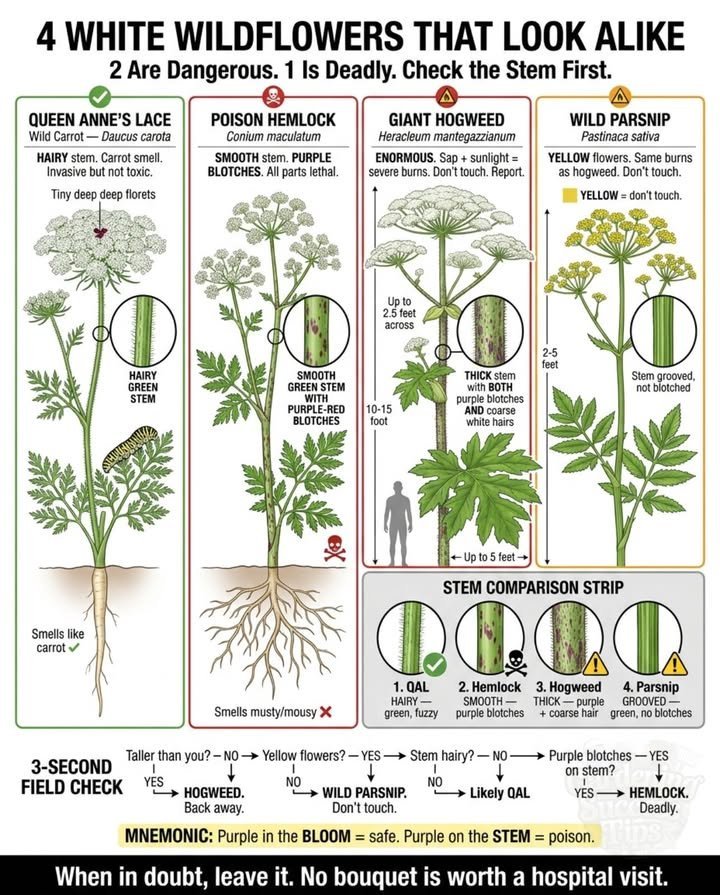
In the world of botany, certain plants can pose significant dangers to humans. Among these are four species that belong to the same family, characterized by their umbrella-shaped white flower clusters and feathery divided leaves. While one of these plants is harmless, three can be harmful in different ways. Understanding how to identify these plants can keep you safe while enjoying nature. You may also find Beef Stroganoff Classic Creamy Dinner For Four useful.
When performing a field check, the first step is to determine the height of the plant. If it stands taller than you and has massive leaves, you are likely looking at giant hogweed. Its sap causes severe blistering burns when skin is exposed to sunlight afterward. This is a plant you should avoid touching, and if encountered, it is best to report it to your county extension office. For more gardening advice, explore different types of compost for your backyard garden in this article on not all compost.
Next, if you see a plant with yellow flowers, you may have encountered wild parsnip. Like giant hogweed, it contains sap that can cause burns upon exposure to sunlight. This specific plant is easily identifiable by its distinctive yellow flowers, signaling danger if touched. You may also find Indulge Soft Baked White useful.
In contrast, if you come across a plant featuring a smooth stem with purple blotches, it is likely poison hemlock. This plant is toxic in every part. A good way to confirm its identity is to crush a leaf and note its musty smell, which is quite different from that of carrot. Poison hemlock can commonly be found growing in ditches and along roadsides across the U.S. More information on recognizing this hazardous plant can be found at the King County website’s section on identifying poison hemlock.
Lastly, if the stem of the plant is hairy with no blotches, you are likely looking at Queen Anne’s lace. This plant is safe to touch and is characterized by its flat cluster of flowers that curls into a bird’s nest shape as it dries. Crushing a leaf or root of Queen Anne’s lace will reveal a pleasant carrot-like fragrance. You may also find Nine Container Flowers Frost To Fall useful.
In summary, the best approach when you’re uncertain about any of these plants is to err on the side of caution. The safest option, Queen Anne’s lace, has a hairy stem and smells like carrot, making it distinct from its dangerous relatives. You may also find Shaved Rainbow Carrot Sesame useful.
Conclusion
Understanding how to identify dangerous plants is crucial for safety while navigating natural spaces. If you want to learn more about invasive plant species that can threaten local ecosystems, check the list of prohibited and restricted species in Michigan. Staying educated about these plants not only protects you but also helps in conserving native flora.