The Sophistication of a Grandmother’s Garden
Our grandmother’s garden seemed random at first glance, with flowers and vegetables mixed together, herbs lining the edges, and a haphazard layout. However, beneath this chaotic facade lay a sophisticated design rooted in traditional horticulture. She inherited this knowledge from her mother, who learned it from hers, passing down generations of wisdom about effective planting strategies. You may also find Beef Stroganoff Classic Creamy Dinner For Four useful.
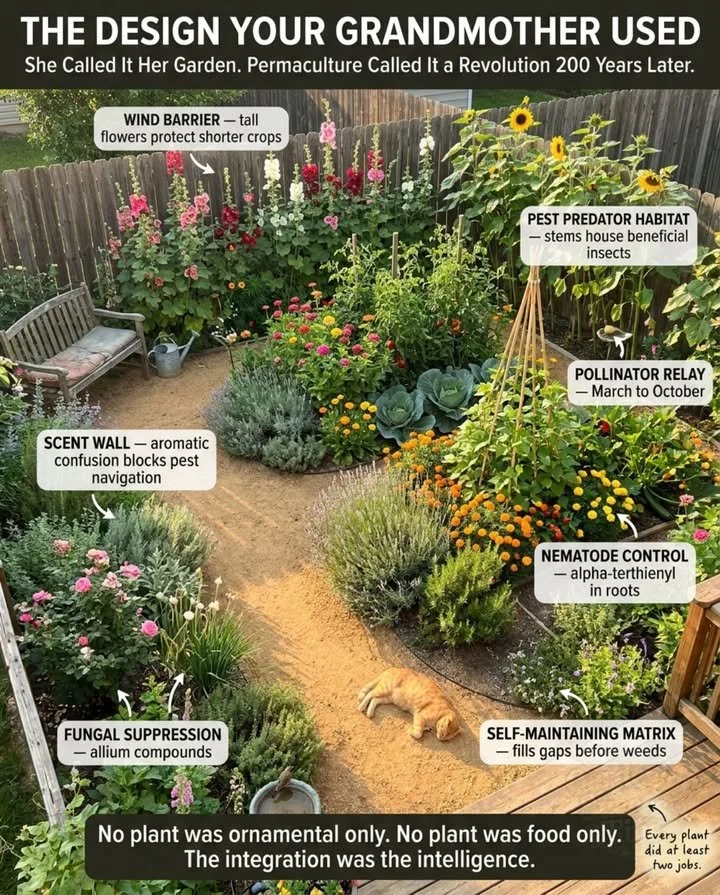
One notable feature of her garden was how tall plants, like hollyhocks and sunflowers, were strategically placed at the back. This wasn’t just for aesthetics; these towering flowers created a wind barrier that protected the smaller crops from drying summer winds. Moreover, the interiors of their stems housed mason bees, while their surfaces attracted predatory wasps, playing a vital role in natural pest control. For those interested in pest management strategies in gardening, you can explore more about using strong scented plants to deter garden pests at this resource.
The Herb Borders
At the borders of her garden, she planted herbs like lavender, sage, rosemary, and thyme. These weren’t just decorative; they acted as a scent wall, releasing volatile aromatic compounds that confused pest insects navigating by scent. This method effectively protected the vegetable crops nestled behind them. It was a natural way to manage pests without resorting to chemicals. You may also find Bread Pudding With Bourbon useful.
Companion Planting Wisdom
The garden also showcased a brilliant pairing of roses next to garlic and chives. This wasn’t merely an aesthetic choice—these allium compounds contributed to suppressing black spot fungal spores in the surrounding air. Even without a formal understanding of the underlying chemistry, she observed that the roses thrived next to garlic, showcasing the benefits of companion planting. You may also find Butterfinger Balls For Everyone useful.
In between her rows of vegetables, marigolds were strategically interspersed. These vibrant flowers added beauty but served a practical purpose as well: their roots released a nematode-killing compound called alpha-terthienyl into the soil. This approach had been validated through university trials, confirming what cottage gardeners had been practicing for centuries. You may also find Chinese Beef And Broccoli Takeout Style useful.
Allowing Self-Seeders
In another testament to her gardening philosophy, she allowed self-seeders such as foxglove, borage, calendula, and love-in-a-mist to naturalize. This wasn’t a sign of laziness; instead, these plants filled in bare spots, preventing weeds from taking hold, while continuously attracting pollinators. They adapted their own density based on seasonal changes, demonstrating a natural system of balance.
Mixed Planting Benefits
Finally, the mix of flowers and vegetables was far from confusion. Each plant served multiple functions, contributing to the overall health of the garden. This symbiotic approach produced food while controlling pests, attracting pollinators, and enhancing soil fertility—all without requiring purchased inputs. It highlighted a garden design that looked beautiful and performed several ecological roles simultaneously.
Conclusion
Reflecting on her garden reveals how traditional practices continue to hold relevance today. By understanding these time-tested methods, modern gardeners might also benefit from exploring effective strategies for flower cultivation, as outlined in this guide. Additionally, many are curious about the economic advantages of gardening. The GRS garden project explores precisely how much a garden can save, which may be illuminating for those considering home gardening investments. You can find more about it here: The GRS garden project: How much does a garden really save?