The Impact of Purple Loosestrife and the Importance of Native Flowers
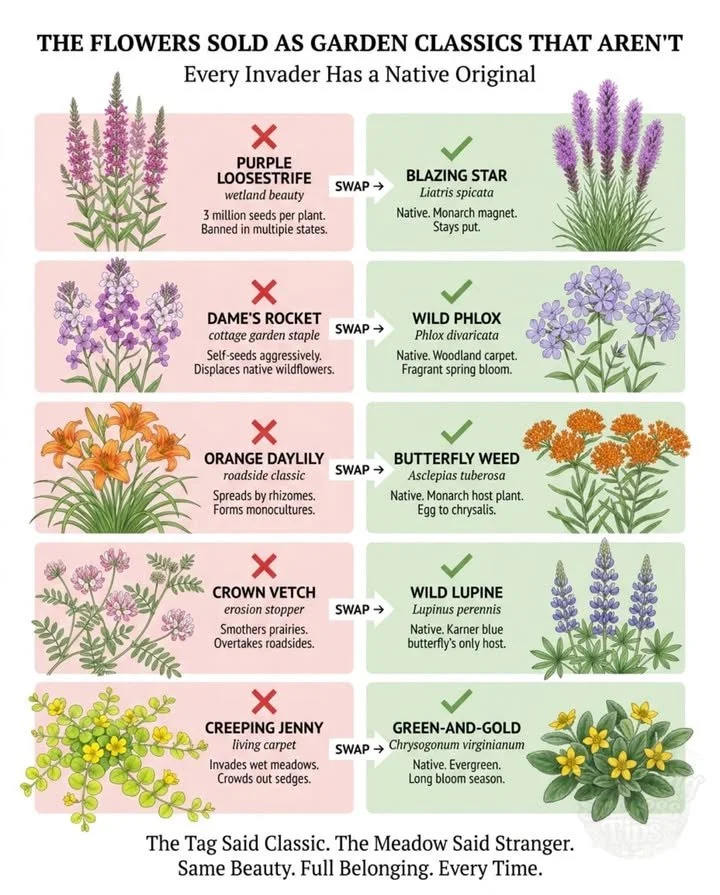
The most stunning flower in a perennial border might be the reason a nearby wetland has gone quiet. Purple loosestrife, with its tall magenta spikes that bloom from July through September, was initially sold as a garden showpiece. However, what the label left out is that a single mature plant can produce millions of seeds per year, which remain viable in wet soil. This invasive species can swiftly dominate habitats such as pond edges, stream banks, and drainage ditches, forming stands so dense that native sedges, cattails, and wetland wildflowers struggle beneath it. Planting native flowers instead can promote ecological balance — for example, consider incorporating plants that attract pollinators into your garden design by learning more about cultivating strong-scented plants.
Gardeners have alternatives that can enrich their landscapes without harming the surrounding ecosystems. The native flowers that thrive in similar environments bloom just as tall and last just as long as purple loosestrife while supporting the species that evolved alongside them. For instance, the blazing star features dense purple spikes, making it a monarch butterfly magnet during fall migration, yet it stays where it is planted, unlike invasive species.
Another excellent choice is the wild phlox, which carpets woodlands with lavender-blue blooms each spring. It offers a visually appealing option without the aggressive self-seeding behavior seen in dame’s rocket. Additionally, butterfly weed presents brilliant orange clusters that not only serve as a nursery for monarchs from egg to chrysalis but also create a vibrant display in any garden. Emphasizing native plants, such as wild lupine, which spikes blue-purple flowers and fixes nitrogen in sandy soils, helps maintain ecological integrity. These plants also provide vital habitats for creatures like the Karner blue butterfly. You may also find Beef Stroganoff Classic Creamy Dinner For Four useful.
By fostering a garden filled with native flowers, you contribute to the health of your local ecosystem — it won’t be quiet; rather, it will buzz with life and vibrant activity. To enhance your gardening efforts, you may want to explore techniques for starting a new garden bed that prioritizes biodiversity.
You may also find Easy Cinnamon Rolls From Scratch useful.
Conclusion
In conclusion, replacing invasive species like purple loosestrife with native plants can lead to healthier ecosystems and gardens. To further educate yourself about effective gardening practices, consider consulting resources like the Handbook from The Sandy Mush Herb Nursery. Additionally, staying informed on pollinator-friendly plants through the Xerces Society blog can empower you to create vibrant, sustainable gardens that support local wildlife.