Your Grandmother’s Planting Calendar Was Alive and Growing in Her Front Yard 🌸🌡️
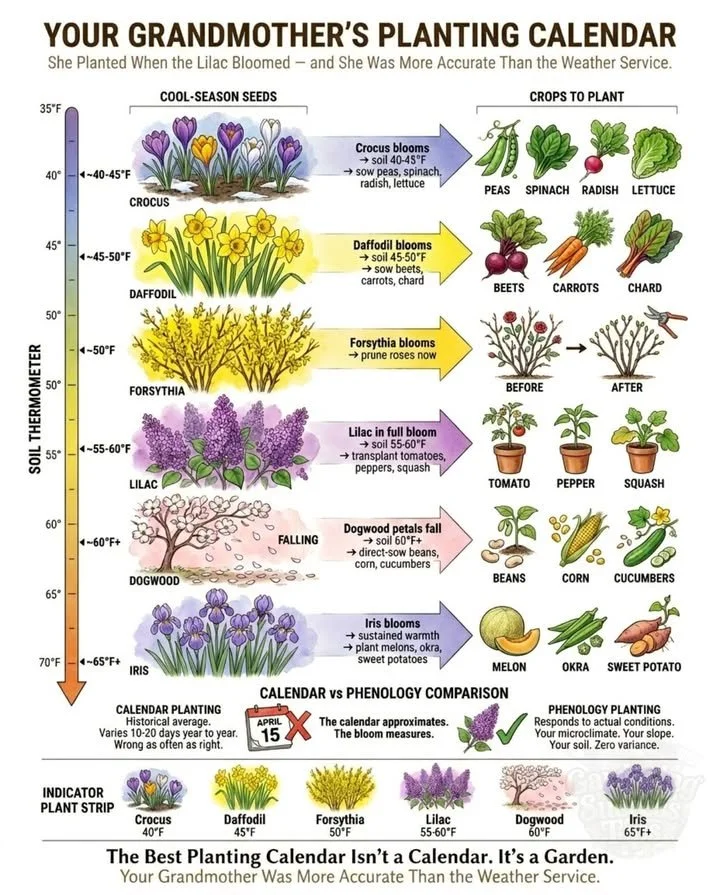
Your grandmother didn’t rely on calendars to tell her when to plant; instead, she used phenology—observing nature to determine the best planting times. For example, she knew it was the right moment to get her hands dirty when the lilacs bloomed. This natural approach to gardening allows for more precise planting, aligning the timing with actual soil temperatures rather than average dates. You may also find Lemon Poppy Seed Muffins Bright Tender Easy useful.
The blooms of specific plants signal when it’s ideal to sow different crops. Here are six key flowers to watch for as indicators for your planting calendar: You may also find Winter Wonderland Chocolate Chip useful.
Crocus Blooms: When crocuses appear, it’s time to sow cool-season seeds. Soil Temperatures should be around 40-45°F for planting peas, spinach, radish, and lettuce. You can start these seeds as soon as you notice the crocus blooms. You may also find 5 Refreshing Watermelon Lemonade Ideas Youll Love useful.
Daffodil Blooms: As the daffodils start to show their vibrant petals, it signals the right time to plant root crops like beets, carrots, and chard—the soil temperature should be between 45-50°F.
Forsythia Blooms: When the forsythia blooms, it’s the perfect time to prune your roses. This is also when you should apply crabgrass pre-emergent, taking advantage of the soil warming to get ahead of the growing season. For tips on growing other plants, consider exploring cool-season vegetables and their germination needs.
Lilac in Full Bloom: The lilacs’ full bloom indicates that it’s the right moment to transplant warm crops according to the soil temperature, which should be around 55-60°F. Plants like tomatoes, peppers, and eggplants thrive when transplanted during this period.
Dogwood Petals Fall: As dogwood petals start to drop, you can directly sow warm seeds. This is the signal that the soil has warmed up to approximately 60°F, making it a great time to plant beans, corn, and cucumbers.
Iris Blooms: Once the irises bloom, it’s time for those heat-loving crops like melons and okra, ideally when the soil reaches 65°F or higher.
The plants in your yard are indicators of your unique gardening microclimate, measuring specifics like slope and soil type better than any calendar can. Embracing this method not only boosts your gardening success but also strengthens your connection with nature.
To explore additional gardening tips, consider checking out edible weeds that may surprise you with their usefulness in your garden.
Conclusion
Using phenology to guide your gardening practices can lead to a greener thumb and a more rewarding harvest. For further reading on gardening insights, check out Try Anything Twice by Jan Struther for its practical advice. Additionally, for a deeper dive into personal narratives, you may find the Story of My Life – Internet Archive quite engaging. Embrace the wisdom of nature, and let it guide your gardening adventures!