
Regrowing Kitchen Scraps: A Simple Guide
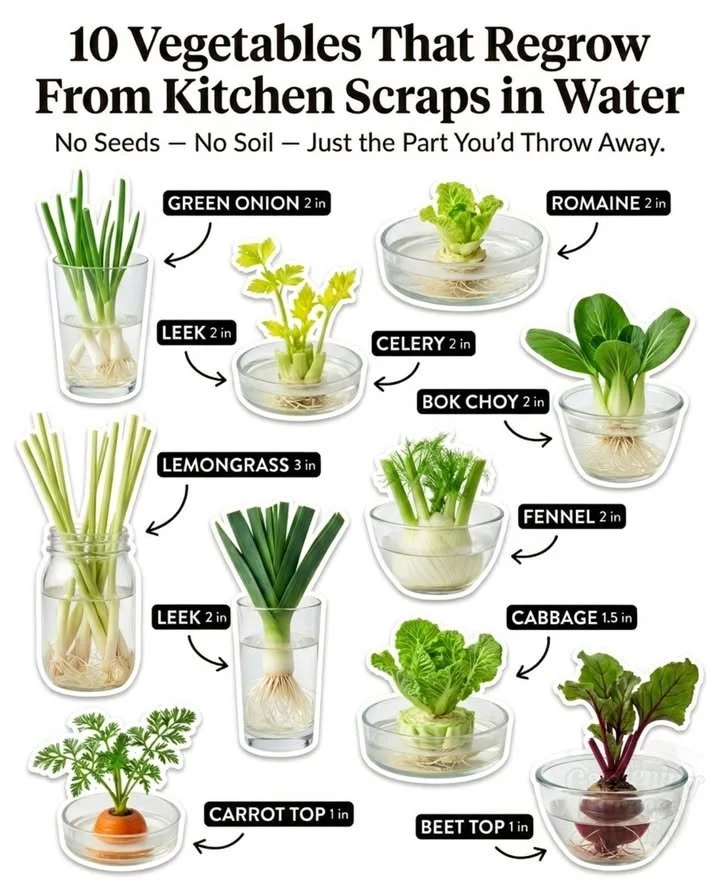
Have you ever thought about how to utilize the kitchen scraps you usually toss into the compost bin? Interestingly, many of these scraps can regrow into fresh produce, and it all starts with the part of the vegetable that hits the cutting board last—the root end, the base, or the white nub. By utilizing a shallow dish of water, you can turn these discarded parts into a second harvest, all without seeds, soil, or a long wait. For example, you can make some compost at home from your food scraps as well.
Regrowing Vegetables from the Kitchen
Green Onions: When preparing dishes with green onions, save about two inches of the white root end. You’ll be pleased to find that the roots can regrow in just three to five days, allowing you to snip and regrow them up to four times. You may also find Biscoff Cookie Butter Cinnamon useful.
Romaine Lettuce: To get new leaves from romaine, cut the base at around two inches and place it in half an inch of water. New leaves will emerge from the center within a week, giving you fresh greens for salads. You may also find Air Fryer Crispy Tofu useful.
Celery: Similarly, if you save the bottom two inches of celery, you’ll see new stalks sprouting from the heart in about five to seven days. This is another great way to maximize your kitchen efficiency while minimizing waste. You may also find Beef Stroganoff Classic Creamy Dinner For Four useful.
Bok Choy: The base of bok choy quickly sends up new leaves. Once roots form, it’s beneficial to transfer it to soil for a complete second plant, thus expanding your kitchen garden.
Lemongrass: For those who enjoy the flavor of lemongrass in their cooking, standing the stalks root-end down in two inches of water will yield roots and new shoots in one to two weeks.
In addition to the vegetables mentioned, other varieties like leeks, fennels, and cabbages also follow this regrowth pattern. Furthermore, while beet tops and carrot tops won’t regenerate new roots, their greens are nutritious and worthwhile to eat.
Practical Tips for Success
To successfully regrow your kitchen scraps, make sure to:
- Change the water regularly and ensure it stays fresh to encourage faster growth.
- Use sunlight wisely; place your regrowing vegetables near a window so they get adequate natural light.
- Consider using a breathable container that allows roots to spread when transferring to soil.
If you’re interested in growing more than just vegetables, you might explore different ideas for refreshing beverages that utilize the fruits and vegetables you cultivate.
Conclusion
Regrowing vegetables from kitchen scraps not only saves money but also reduces food waste. If you want to dive deeper into the specifics of vegetable regeneration, check out how the part of most vegetables that hits the cutting board last can be quite remarkable, as highlighted in this interesting tweet. Additionally, for those looking for inspiration and beauty in words, consider visiting The Poet’s Corner for Ms. Lundberg’s poetry of the day.